
Last updated November 18, 2026
Insulation Permits, Codes & Inspections in NV: What You Need to Know
Nevada Revised Statutes require a building permit for insulation work that’s part of a “substantial improvement,” and that threshold is vague enough that some contractors read it in whatever way saves them paperwork. The homeowner carries the risk. Here’s the part most people miss: a missing permit rarely surfaces during the job. It surfaces years later at the title search, or in the middle of an insurance claim, when the work you paid for suddenly has no paper trail. This guide covers when a permit is actually required in Nevada, when it isn’t, what a Clark County inspector checks, and how unpermitted work plays out at sale. We’re writing it from Enterprise, where the climate and the local amendments make the answers specific.
Quick Answer
In Nevada, adding insulation as routine maintenance usually doesn’t require a permit, but replacing attic insulation as part of a larger remodel, a change in insulation type, or a project tied to a “substantial improvement” can require one under Clark County building code. The deciding factors are scope, whether you’re doing a like-for-like top-up or changing the assembly, and whether your specific Enterprise zip code falls under stricter municipal amendments. When in doubt, pull the permit. A small fee up front beats a title problem later.
Table of Contents
- When Does Nevada Require a Permit for Insulation?
- The Clark County Threshold: Routine Maintenance vs. Substantial Improvement
- Enterprise Zip Codes and Stricter Municipal Amendments
- What a Nevada Insulation Inspection Actually Checks
- How Unpermitted Insulation Shows Up in a Home Sale
- How to Pull Your Own Permit as a Homeowner
- Why Enterprise’s Climate Makes Insulation Scope Matter
- How to Confirm Your Contractor Handled It Correctly
When Does Nevada Require a Permit for Insulation?
The short version: Nevada doesn’t have a single statewide insulation permit rule. What it has is a building code framework adopted at the county level, and Clark County’s adoption is the one that governs most of the Las Vegas Valley, including Enterprise. Under that framework, insulation work that’s classified as routine maintenance and repair typically needs no permit. Work that’s part of a substantial improvement, a change of use, or a structural alteration usually does.
The gray area sits in the middle. Topping up existing attic insulation from an under-insulated R-value to a higher one is generally treated as maintenance. Removing and replacing the entire assembly, switching from batt to spray foam, or adding insulation as part of a room addition, an attic conversion, or a re-roof is where permit questions start. The distinction matters because it changes who is legally responsible for the work being done to code.
Here’s how the categories usually break down in practice:
- No permit typically required: Adding blown-in insulation over existing material to raise the R-value, patching damaged batts, sealing obvious air gaps at the attic hatch.
- Permit often required: Full removal and replacement of attic insulation, a switch to spray foam that changes the assembly and the vapor profile, insulation bundled into a remodel or addition, any work that affects structural members.
- Permit almost always required: Insulation tied to a change of use (garage conversion, attic bedroom), work that requires an electrical or mechanical inspection to close out, or anything that changes the building envelope in a way that affects energy code compliance.
We’ve watched homeowners in Enterprise get burned by the assumption that “insulation is just insulation.” The scope is what triggers the permit, not the material.
The Clark County Threshold: Routine Maintenance vs. Substantial Improvement
Clark County’s building department draws the line at “substantial improvement,” and the phrase is doing more work than it looks like. In code terms, a substantial improvement is generally any reconstruction, rehabilitation, or improvement where the cost equals or exceeds a set percentage of the structure’s market value. Insulation that’s part of a project crossing that line gets pulled into the permit process even if the insulation itself would have been routine on its own.
For a typical attic re-insulation job in Enterprise, that means the honest question isn’t just “am I adding insulation?” It’s “am I adding insulation as part of something bigger?” If the answer is yes, treat the permit as required until the county tells you otherwise.
Two practical markers we use to make the call:
- Is the existing insulation staying in place? If you’re adding on top and not disturbing the underlying assembly, you’re usually in maintenance territory.
- Is any other trade involved? If a roofer, electrician, or HVAC contractor is opening the envelope, or the insulation is part of a permit-triggering project, plan on a single combined permit for the whole scope, not a separate insulation one.
The cost gap is small. A residential permit for insulation-scale work in Clark County generally runs in the low hundreds of dollars, with inspection included. Compare that to the remediation cost of unpermitted work showing up in a title search and the math is obvious. This is the kind of thing the attic insulation in Enterprise team walks through on every estimate, because scope drives everything downstream.
Enterprise Zip Codes and Stricter Municipal Amendments
Enterprise sits in Clark County, but it isn’t purely county jurisdiction everywhere. Parts of the community fall under municipal boundaries with their own adopted amendments to the state code, and a handful of Enterprise zip codes carry stricter local inspection requirements than the county baseline. The most common differences we see:
- Tighter energy code compliance for new assemblies, which affects the R-value the inspector will verify against the plans.
- Additional documentation requirements for spray foam installations, particularly around ventilation and fire-rated assemblies.
- Different inspection scheduling windows, which changes how quickly a job can close out.
The practical upshot: before anyone touches your attic in Enterprise, the contractor should confirm which jurisdiction covers your address. Two houses a few streets apart can have different requirements. If the contractor can’t tell you which jurisdiction your permit runs through, that’s a signal to slow down.
The good news is that the work itself doesn’t change much. A well-installed assembly passes inspection in either jurisdiction. What changes is the paperwork and the verification checklist.
What a Nevada Insulation Inspection Actually Checks
A Nevada insulation inspection isn’t a vibe check. It’s a series of specific verifications, and knowing what they are is the easiest way to make sure your job passes on the first visit. In our experience, most first-visit failures come down to a short list of avoidable items, not bad craftsmanship.
Here’s what inspectors typically look at line by line:
- Installed R-value. Measured in the field against the plans. In Enterprise, the summer attic temperatures regularly exceed 140°F, so how the material settles matters. Blown-in fiberglass and cellulose settle, and the inspector will check installed depth against the target.
- Coverage. No gaps, no compressed batts, no spots where insulation is missing over the living space.
- Baffles and venting. Intake and exhaust venting must stay clear. Insulation blown against the soffit vents is one of the most common corrections inspectors write.
- Air sealing. Gaps at the top plates, wiring penetrations, and the attic hatch should be sealed before insulation covers them.
- Insulation on the correct surfaces. No insulation on top of can lights unless they’re rated for it, no insulation backside of a chimney.
- Vapor and fire separation. Particularly for spray foam, the assembly must meet the manufacturer’s listed design and any required thermal barrier.
- Documentation. Product data sheets and, where required, the installer’s certification on file.
To pass on the first visit, do these three things before the inspector arrives:
- Have the product spec sheets and permit card at the job site, not in the truck.
- Take photos of the sealed penetrations and installed baffles. Photos aren’t a substitute for the inspection, but they resolve a lot of questions on the spot.
- Confirm the final installed depth matches the plan, not the material’s nominal label. The label says one number; the settled depth says another.
This is exactly the kind of coordination the spray foam insulation in Enterprise work depends on, since foam assemblies draw the most scrutiny.
How Unpermitted Insulation Shows Up in a Home Sale
Here’s the scenario we see most: the seller years ago had the attic re-insulated, the job looked fine, and nobody pulled a permit. The work reflected in the county records is silent. Then the buyer’s title search or their inspector flags it, and the deal hits a snag at exactly the wrong moment.
The remediations typically fall into three buckets:
- Retroactive permit. The seller pays for a permit after the fact, and the county inspects the existing work. If the assembly passes, the fee stays low, usually in the low-to-mid hundreds of dollars. If it fails, the work has to be corrected first.
- Correction and re-inspection. Missing baffles, uncovered gaps, or undersized R-value all get corrected and re-inspected. That’s a real cost, often several hundred to over a thousand dollars depending on the scope.
- Price reduction or credit. The buyer prices the risk into their offer. This is usually the most expensive path for the seller, and the least predictable.
None of these are catastrophic, and none of them are cheap. What makes the situation worse is the seller discovering the problem during the sale rather than before it. If you’re in Enterprise and you don’t know whether your attic insulation was permitted, that’s a five-minute records question at the county. It’s worth answering before a buyer’s inspector answers it for you.
How to Pull Your Own Permit as a Homeowner
Nevada lets homeowners pull certain permits on their own property for work they do themselves. If you’re going to install insulation in your own attic, you can usually do this without a contractor’s license on the job. That said, the permit is what holds the record, and a homeowner-pulled permit is inspected the same way a contractor’s is.
The typical process in Clark County looks like this:
- Confirm you can pull the permit as an owner-builder. Call the county building department with your address and confirm the jurisdiction. If you’re outside incorporated Enterprise, that’s Clark County. If you’re in an incorporated pocket, it may be your municipality.
- Gather your scope documents. A simple site plan of the attic, the proposed R-value, the material type, and where you’re installing it.
- Submit the application. Clark County’s online portal handles most residential over-the-counter permits, and simple insulation scopes often get reviewed quickly.
- Pay the fee and post the permit. Have the permit card visible at the property so the inspector can sign it off.
- Schedule the inspection when the work is complete. The inspector verifies the same line items on the list above.
- Close out the permit. Get the final sign-off in writing, and keep a copy with your home records. This document is what protects you at sale.
We’ve seen homeowners do this well when the scope stays simple. What we don’t recommend is DIY spray foam on a full attic assembly. The safety, fire, and vapor questions with foam are too easy to get wrong, and the inspector will hold the homeowner to the same standard. For that kind of work, hiring a professional is the safer call, and it’s the one we’d make ourselves.
Why Enterprise’s Climate Makes Insulation Scope Matter
Enterprise’s climate shapes how insulation behaves, and that’s relevant to the permit question because the scope that passes inspection in a mild climate can fail in ours. The valley regularly pushes past 110°F in July, and attics routinely reach temperatures that shorten the reach of some materials. Spring winds blowing in from the west also drive dust into attic cavities through any gap you miss.
Two practical consequences:
- Blown-in insulation settles more than the label says. The installed depth that satisfies the target R-value in an Enterprise attic often exceeds the nominal plan depth, particularly for loose-fill fiberglass and GreenFiber cellulose. Inspectors check the depth, not the label.
- Air sealing matters more here. A sealed assembly handles the heat better, and the inspector will check for it. Insulation stuffed over an open top plate passes some inspections and fails others, depending on the jurisdiction.
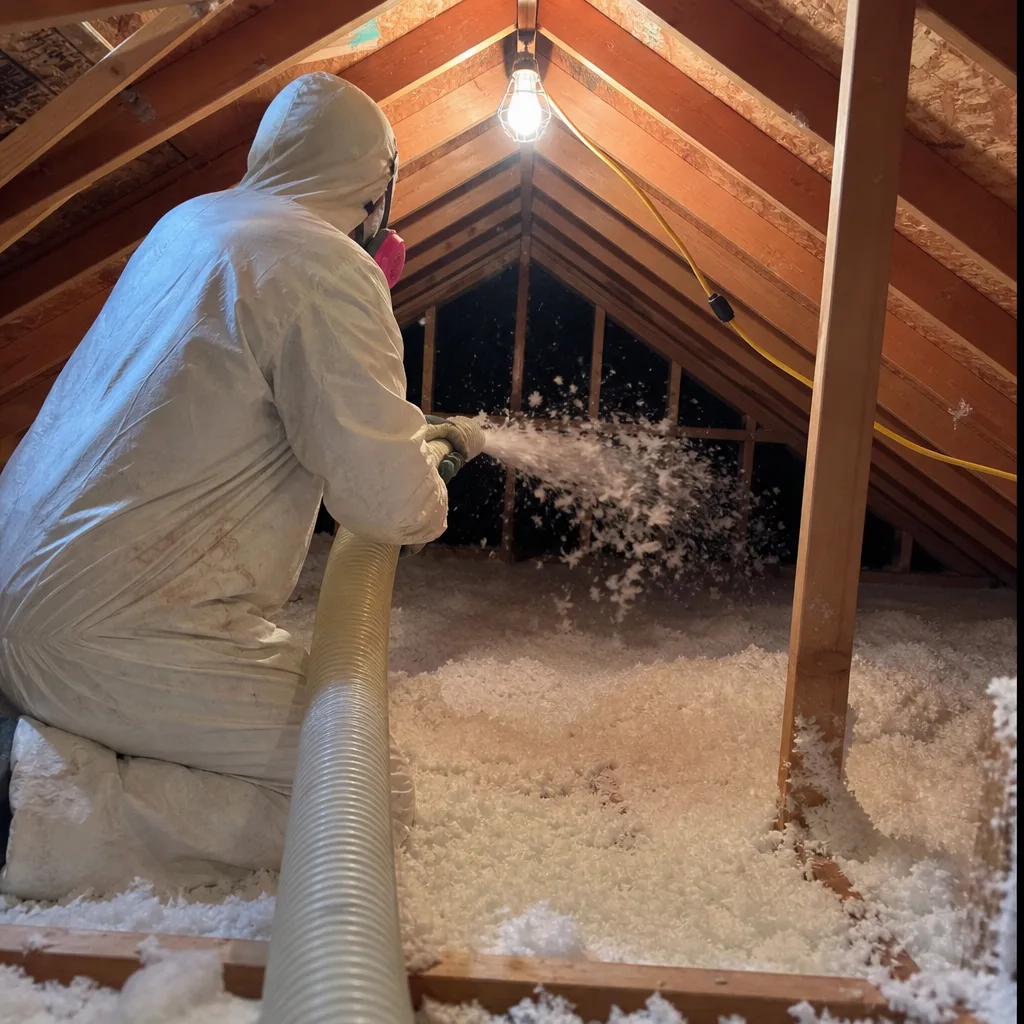
We’ve also seen a pattern of spring failures in Enterprise attics where batts were installed against soffit vents and the intake was blocked. The insulation itself was fine. The air movement wasn’t. That’s the sort of thing the blown in insulation in Enterprise approach is designed around, and it’s why we install baffles before we blow a single bag.
How to Confirm Your Contractor Handled It Correctly
When you hire a contractor, the permit conversation belongs in the estimate, not in the parking lot on the day of the job. Here’s what to ask, in writing:
- “Is this job permitted, and who is pulling the permit?” The answer should be immediate and specific. If the contractor says the job doesn’t need one, ask them to explain the scope classification in writing.
- “What materials are going in, and what are their listed R-values?” Match the answer to what ends up on the permit.
- “Who is doing the inspection, and who shows up at the door?” This is where a documented technician protocol is worth the premium. Every Aspen Attic Insulation Enterprise technician is background-checked, identity-verified, and arrives in a clean marked uniform with photo ID. We send their name and photo before the visit, and if anyone else shows up, the visit is on us.
- “What’s the guarantee, in writing?” The 365-Day Done Right Promise covers labor and materials for a full year. If it fails, we come back at no charge.
- “What does this cost, up front?” Every job gets a written price before work begins. No post-job surprises.
We work with Owens Corning, Johns Manville, GreenFiber, and Demilec, among other brands, so the right material goes in for the specific assembly, not just the one on the shelf. The permit follows the material, so the two decisions run together.
Common Mistakes to Avoid
- Assuming insulation never needs a permit. It usually doesn’t, and it sometimes does. The scope decides. In Enterprise, a full replacement as part of a re-roof or a remodel is the most common permit-triggering case we see.
- Letting the contractor “handle” the permit without seeing documentation. Ask for the permit number and the inspection pass in writing. If they can’t produce either after the job, the work isn’t protected.
- Skipping the inspection to close a job faster. An open permit blocks the property record, which is a problem at sale. It’s not a problem a buyer’s agent will overlook.
- Installing over existing insulation without sealing air gaps first. The insulation is only as good as the assembly underneath it. The inspector will check, and so should you.
- Assuming Clark County codes cover your pocket of Enterprise. Some zip codes carry stricter municipal amendments. Confirm the jurisdiction before work starts.
- Pulling your own permit for spray foam. The fire and vapor requirements on a full foam assembly are not homeowner territory. Hire a professional.
- Letting the final inspection go unclosed. The permit card is the record. Get the sign-off in writing and keep it with your home documents.
When to Call a Professional
If the scope is anything beyond topping up existing insulation, a professional is the lower-risk path. That includes a full attic removal and replacement, a switch to spray foam, insulation as part of a remodel, or anything involving a change of use like a garage or attic conversion. The permit, the inspection, and the guarantee all work better when one team is accountable for the whole thing.
It also matters if you’re not the only adult in the house. If you’re home alone during the day, or you have young kids, or you’re managing a parent’s home, handing a stranger access to your attic should come with documentation. Aspen Attic Insulation Enterprise sends the technician’s name and photo before the visit, and every tech is background-checked and shows a photo ID badge at the door. If anyone else shows up, the visit is free.
Aspen Attic Insulation Enterprise offers free estimates in Enterprise. Every estimate includes a written price before any work begins, and we answer the phone with a live person 24/7. Call (844) 761-9996 to schedule.
Frequently Asked Questions
It depends on the scope. Topping up existing attic insulation as routine maintenance usually doesn’t require a permit in Nevada, but replacing the full assembly, switching to spray foam, or installing insulation as part of a substantial improvement typically does under Clark County building code. If your Enterprise address falls in a pocket with stricter municipal amendments, the bar is higher. When in doubt, pull the permit.
Residential permits for insulation-scale work generally run in the low hundreds of dollars, with inspection included. The cost is small compared to the remediation cost of unpermitted work at sale, which can run into four figures once corrections and re-inspections are factored in. Call (844) 761-9996 for a quote on permitted work, estimates are free.
An insulation inspector checks installed R-value against the plan, coverage and depth, baffle clearance at the soffits, air sealing at penetrations, insulation placement around heat sources, and for spray foam, the required vapor and fire separation. Depth is measured in the field, which is why settled-blown-in jobs in Enterprise get closer attention than the label suggests. Call to talk through your scope, (844) 761-9996.
Yes, usually. Nevada lets homeowners pull certain permits for work on their own residence under an owner-builder arrangement, and Clark County’s online portal handles most residential over-the-counter permits. The catch is the inspection standard: homeowner-pulled permits get the same line-by-line check a contractor’s does. For DIY spray foam or full assembly replacements, we’d hire a professional.
It usually surfaces during the title search or the buyer’s inspection, and it becomes a negotiation point. The seller can pursue a retroactive permit, correct and re-inspect, or credit the buyer. The retroactive permit is almost always the cheapest path, provided the assembly passes. If you’re buying or selling in Enterprise, checking the permit record early saves the last-minute scramble.
Yes. On jobs where a permit is required, we manage the paperwork and the inspection close-out as part of the project, and you get the written price before any work begins. Every job carries the 365-Day Done Right Promise, which covers labor and materials for a full year in writing. Call (844) 761-9996 for a free estimate on your Enterprise project.
The Bottom Line
Nevada doesn’t have a clean statewide answer on insulation permits, and that ambiguity is the risk. Routine top-ups usually don’t need one. Full replacements, spray foam conversions, and insulation bundled into a bigger scope usually do. Clark County code sets the baseline, and some Enterprise zip codes carry stricter municipal amendments. Unpermitted work doesn’t usually cause problems during the job; it causes them at the title search and the insurance claim. Pull the permit when the scope calls for it, get the final sign-off in writing, and keep it with your home records. That’s the whole game.
If you’d rather not sort through the code yourself, we’re happy to do it on the estimate. Our technicians have up to 24 years of experience, and every written price you get from us reflects a fully permitted scope where one is required. Call Aspen Attic Insulation Enterprise at (844) 761-9996 for a free estimate in Enterprise, and browse our Enterprise home page for more on how we work.
Written by the team at Aspen Attic Insulation Enterprise.