
Last updated November 18, 2026
Seasonal Insulation Care for Enterprise: Year-Round Homeowner’s Guide
The best time to fix attic insulation in Enterprise is October through February. That’s roughly a 16-week window when attics are cool enough to work in safely and before summer cooling costs lock in for another year. Most homeowners miss it because no one ever told them there was a deadline. Enterprise doesn’t run on four gentle seasons. It gives you two brutal ones and two short transition windows, and each phase puts a different kind of stress on your insulation. This guide walks through what to check in Enterprise, month by month, and how to use that narrow window before the cycle starts over.
Quick Answer
In Enterprise, insulation care is a two-season problem, not a four-season one. The intense summer heat load and the monsoon moisture spell do the real damage, and the cool fall-to-winter stretch (October through February) is your only safe, cost-effective window to inspect, air-seal, and re-insulate. Check in May before heat peaks, watch for moisture after monsoon storms, air-seal every fall before adding material, and run a 20-minute winter inspection to find your top heat-loss points.
Table of Contents
- What to Check in May Before Summer Heat Load Peaks
- The Monsoon Moisture Check for Flat and Low-Slope Roofs
- Why Fall Is Air-Sealing Season in Enterprise
- The 20-Minute Winter Inspection That Finds Your Heat Loss
- How Radiant Heat Load Quietly Wears Down Insulation
- The Enterprise Month-by-Month Care Calendar
- Common Mistakes to Avoid
- When to Call a Professional
What to Check in May Before Summer Heat Load Peaks
May is the last calm month in Enterprise before the heat sets in for real. What you find in the attic in May tells you what your cooling bills will look like in July and August. Homeowners who wait until August to think about insulation lose a full season’s savings. By then the attic is too hot to work in safely, crews are booked out, and you’ve already paid the high cooling bill you were trying to avoid.
Here’s what to check in May, and it takes under an hour:
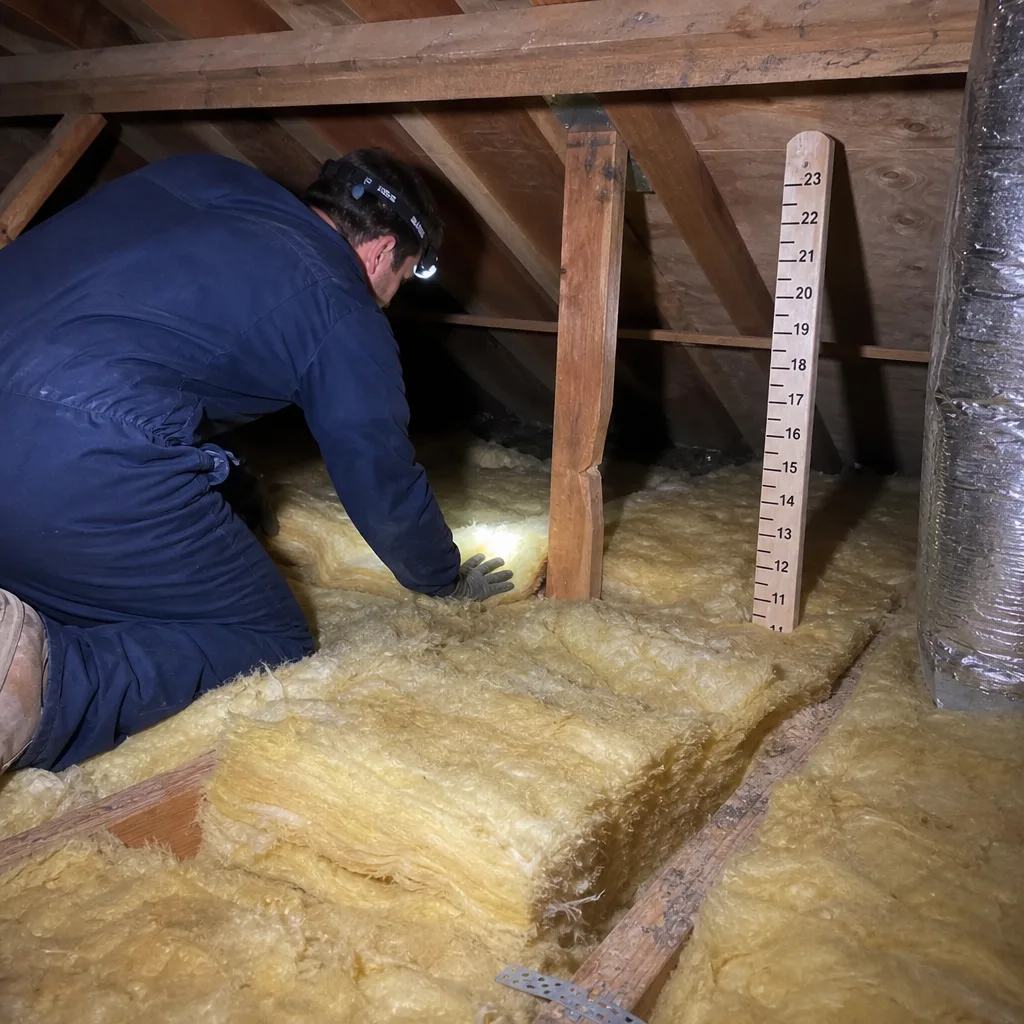
- Measure the depth of your attic insulation. In Enterprise attics, we commonly find six to eight inches of settled material. For our climate, you want more. Write down the number.
- Look for gaps and compression. Insulation that’s been crushed by stored boxes or walked on loses most of its value. Map where it’s thin.
- Feel for air leaks around penetrations. Light fixtures, plumbing stacks, and top plates are where hot attic air sneaks into your living space.
- Check the attic hatch. An unsealed hatch is a hole in your ceiling, plain and simple.
- Note the direction of the sun. South- and west-facing roof sections in Enterprise get hammered by afternoon sun. The attic beneath them runs hottest.
Every one of those findings feeds into the fall work. May is diagnosis; October is the repair. If you’d rather have a trained eye look, our attic insulation in Enterprise assessment answers those questions in about 30 minutes, with a written price before any work starts.
The Monsoon Moisture Check for Flat and Low-Slope Roofs
Enterprise gets its yearly moisture in a compressed monsoon window, and homes with flat or low-slope rooflines take the worst of it. Water that can’t run off finds the seams. Once it slips past the roof deck, it lands in your insulation, and wet insulation is close to worthless. Fiberglass loses its loft. Cellulose clumps. The moisture also creates the conditions for mold, which is a bigger problem than a high cooling bill.
After each significant monsoon storm, do a walkthrough. You’re not fixing anything yet, just looking and smelling. What to check:
- Ceiling stains or bubbling paint on the top floor, especially near the perimeter of the home where low-slope roofs pond water.
- A musty smell in upstairs rooms or closets. That smell usually means moisture is trapped in the building assembly.
- Sagging insulation visible from the attic access. Wet insulation pulls down and looks heavy.
- Rust or water tracks on roof sheathing, trusses, or nails when you get a look inside the attic.
- Condensation on ductwork in the attic, which is common in Enterprise when warm humid air meets cold ducts.
If you find any of these, don’t pile new insulation on top. Waterlogged material has to come out first, the source has to be sealed, and the cavity has to dry. Covering wet insulation is one of the fastest ways to turn a fixable leak into a mold remediation job. This is where an honest assessment matters more than a fast quote.
Why Fall Is Air-Sealing Season in Enterprise
This is the point most homeowners get wrong, and it costs them money every year. Adding insulation without air-sealing first is a documented waste. You can blow a foot of new material into an attic and still feel cold drafts and high bills if hot air keeps leaking through the same gaps you never sealed. The insulation slows heat transfer. It does not stop air movement. Those are two different jobs, and the order matters.
Fall is the right time in Enterprise because the attic is finally cool enough to work in comfortably and the summer heat load is behind you. Here’s the sequence a trained crew follows, and why:
- Find the leaks. Penetrations in the ceiling plane (wiring, plumbing, recessed lights, the attic hatch) get identified and marked.
- Seal the leaks. Gaps are closed with caulk, foam, or rigid blocking, depending on the size. This stops air movement before anything else goes in.
- Correct moisture and safety problems. Any wet material comes out, and any venting or combustion-air concern gets addressed.
- Add insulation last. Only after the envelope is tight does new material go in, so the investment actually performs.
We use products from GreenFiber and Owens Corning to match the job, because a loose-fill attic and a spray-foam rim joist need different material. If your attic has odd geometry or knee walls, spray foam insulation in Enterprise often seals gaps that loose material can’t reach. Air-sealing first, then insulating, is the order that makes the written price you get at the start actually pay off.
The 20-Minute Winter Inspection That Finds Your Heat Loss
Enterprise winters are mild, which makes them the perfect working window. It also makes them the perfect inspection season, because you can get into the attic without heat exhaustion and actually see what’s going on. This inspection takes about 20 minutes and points to the three heat-loss locations in a typical Enterprise home.
- The attic hatch and pull-down stairs. This is the single most common heat-loss point in Enterprise homes. If it isn’t weatherstripped and insulated with a rigid cover, it’s an open door between the living space and the attic.
- Top plates and recessed lights. The seams where walls meet the ceiling plane are usually unsealed on older homes. Every can light that isn’t sealed or IC-rated leaks conditioned air straight into the attic.
- Ductwork and the air handler. Leaky ducts in a hot or cold attic lose a big share of the air you’re paying to cool or heat. Look for disconnected joints and peeling tape, especially at the plenum.
Run this inspection after a cold snap if you can. You’ll feel the drafts with your hand before you ever see them. Write down what you find and take it into the fall-planning conversation. During the mild months, our team can get into attics quickly, and every visit comes with the technician’s name and photo sent ahead so you know who’s at the door.
How Radiant Heat Load Quietly Wears Down Insulation
Enterprise summers don’t just make your air conditioner work harder; they wear down the insulation itself. Radiant heat from a sun-baked roof deck raises attic temperatures to the point where the material at the top of the cavity takes a beating year after year. Settling accelerates. Staples pull free. Vapor barriers wrinkle and separate. None of this is dramatic, and that’s the problem: it happens slowly enough that homeowners don’t notice until the bills jump.
A few realities about heat load in our climate:
- R-value targets are higher here. The attic insulation depth that’s fine somewhere cooler leaves Enterprise homes under-insulated for the summer load.
- West- and south-facing roof sections run hottest and are where material degrades fastest. If your home has a lot of either, budget for inspection sooner.
- Radiant barrier and attic venting work alongside insulation, not instead of it. They reduce the heat coming in; insulation keeps it from getting into your rooms.
- Air handler location matters. An air handler in a superheated attic loses efficiency no matter how good the insulation around the living space is.
This is why “insulate once and forget it” doesn’t work in Enterprise. The material needs a check every couple of years, and the transition seasons are when to do it. For homes with significant heat-load exposure, blown in insulation in Enterprise is often the practical way to top up settled material without tearing anything out.
The Enterprise Month-by-Month Care Calendar
Generic seasonal guides tell you to “check insulation in fall.” That advice was written for a climate that doesn’t exist here. This calendar tracks Enterprise’s actual weather, the two brutal seasons and the two transition windows, and lists one clear task per phase.
- May (pre-summer): Inspect and measure. Confirm insulation depth, find gaps, note the sun-exposed sections. This is diagnosis, before the heat locks in.
- June through September (peak heat): Monitor cooling bills and comfort. Don’t attempt attic work; it’s unsafe in the peak heat. Watch for rooms that never cool down.
- Late September through October (transition): The working window opens. Air-seal, replace any wet material, and add insulation before winter.
- November through February (mild winter): Run the 20-minute inspection after a cold snap. Address the top three heat-loss points: hatch, top plates, ducts. Fixing now beats fixing in August.
- March through April (pre-monsoon): Check roof and flashing, confirm the attic is dry, and make sure no moisture source will feed the monsoon season.
- July through September (monsoon): After each storm, do the moisture walkthrough. If you find wet insulation, schedule removal and drying before adding anything.
Notice the pattern: the only safe, cost-effective time to actually work in an Enterprise attic is the cool stretch. Everything else is monitoring or cleanup. That 16-week window is your deadline, and it comes once a year.
Common Mistakes to Avoid
- Adding insulation without air-sealing. This is the most expensive mistake in Enterprise. New material over the same unsealed gaps performs far below what you paid for and hides the drafts you meant to fix.
- Insulating a wet attic. After monsoon season, wet material has to come out and the source has to be sealed. Covering moisture traps it and invites mold, which turns a repair into a remediation.
- Waiting until August to call. Peak heat makes attic work unsafe and the calendar is already full. By August you’ve paid the cooling bill you were trying to prevent, and you’re stuck with the work pushed to the next window.
- Compressing or storing over insulation. Boxes in the attic, or walking on the material, crush it and destroy its value. If you need attic storage, build a raised platform that leaves the insulation intact.
- Assuming “more R-value” is the whole answer. Depth without sealing, venting, and duct attention leaves real money on the table. The envelope is a system.
- Skipping the attic hatch. It’s small, it’s easy to forget, and in Enterprise homes it’s routinely one of the biggest heat-loss points in the whole house.
- Accepting a verbal quote under pressure. You should have a written price before any work starts and a written guarantee covering labor and materials. If a company can’t put it in writing, that tells you something.
When to Call a Professional
Some tasks are honest homeowner checks: measuring depth, spotting stains, feeling for drafts on a cold morning. Others call for a trained set of eyes, and answering the phone is easier than guessing. Call us when you find wet or sagging insulation after a monsoon storm, when your upstairs rooms never seem to cool down despite the air conditioner running, when the attic hatch or recessed lights are leaking air you can feel, or when you’ve decided to fix things and want it done before the window closes. Attic work in Enterprise combines heat, height, and tight quarters, and that’s a real safety risk in the peak months. Aspen Attic Insulation Enterprise offers free estimates in Enterprise – call (844) 761-9996 and we’ll tell you honestly whether you need work now or can wait.
Frequently Asked Questions
October through February is the best window. Attics are cool enough to work in safely, and the work is done before summer cooling costs lock in for the next year. Waiting until late spring or summer means peak heat, longer booking times, and another season of high bills.
Yes, air-sealing comes first. Adding insulation without sealing the gaps in your ceiling plane is a documented waste, because the material slows heat transfer but doesn’t stop air movement. Seal the leaks, then add material.
Check insulation depth, look for gaps and compressed material, feel for air leaks around fixtures and the attic hatch, and note which roof sections get the most afternoon sun. That May inspection tells you what to fix in the fall window.
Find the moisture source first and stop it, then remove the wet insulation and let the cavity dry. Never cover wet material with new insulation. If you saw stains, a musty smell, or sagging material, get an assessment before adding anything.
It can lose effectiveness over time. Years of radiant heat load cause settling, compression, and separation of vapor barriers. That’s why a check every couple of years during the cool season catches small problems before the bills climb.
It depends on the attic. Loose-fill works well for topping up settled material in open attics, while spray foam seals gaps that loose material can’t reach. We match the product to the job, using brands like Owens Corning, GreenFiber, and Johns Manville, and put a written price in front of you before any work starts. Call (844) 761-9996 for a free estimate.
The Bottom Line
Enterprise insulation care is really about timing. Diagnose in May before the heat peaks. Watch for moisture through the monsoon. Air-seal first and add insulation in the fall. Run a 20-minute inspection in the mild winter to find your hatch, top plates, and duct leaks. Skip the generic advice written for four-season climates; build your plan around the two brutal seasons and the two short transition windows that actually shape our homes. Every job we do carries a written price before work begins and the 365-Day Done Right Promise, with a free second visit if a repair fails. If you’re ready to work inside the window, call (844) 761-9996 for a free estimate.
Written by the team at Aspen Attic Insulation Enterprise.