
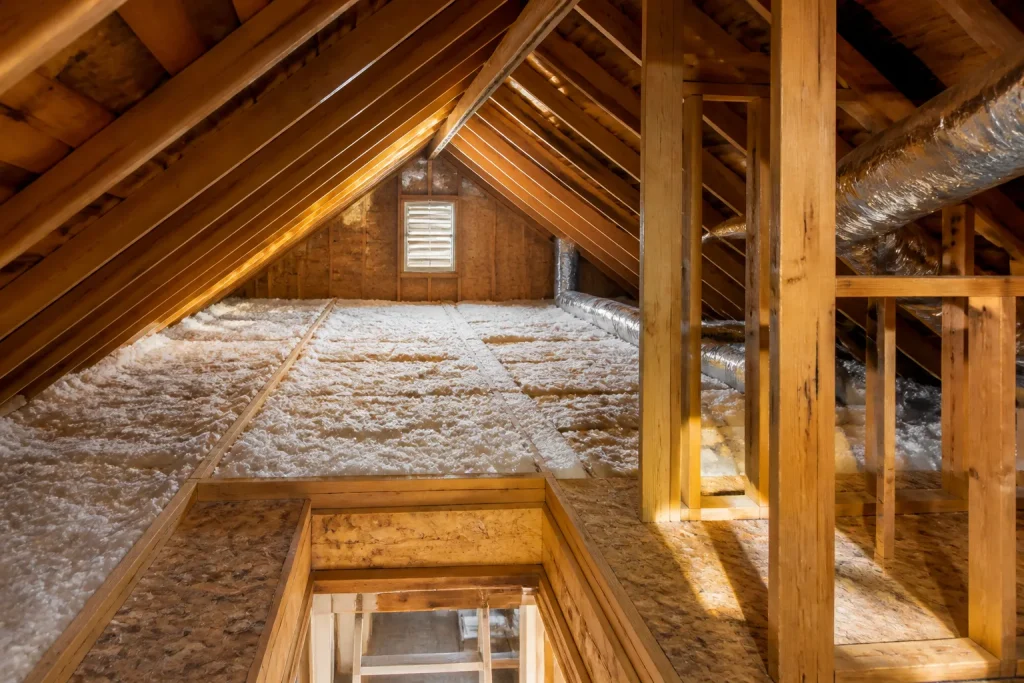
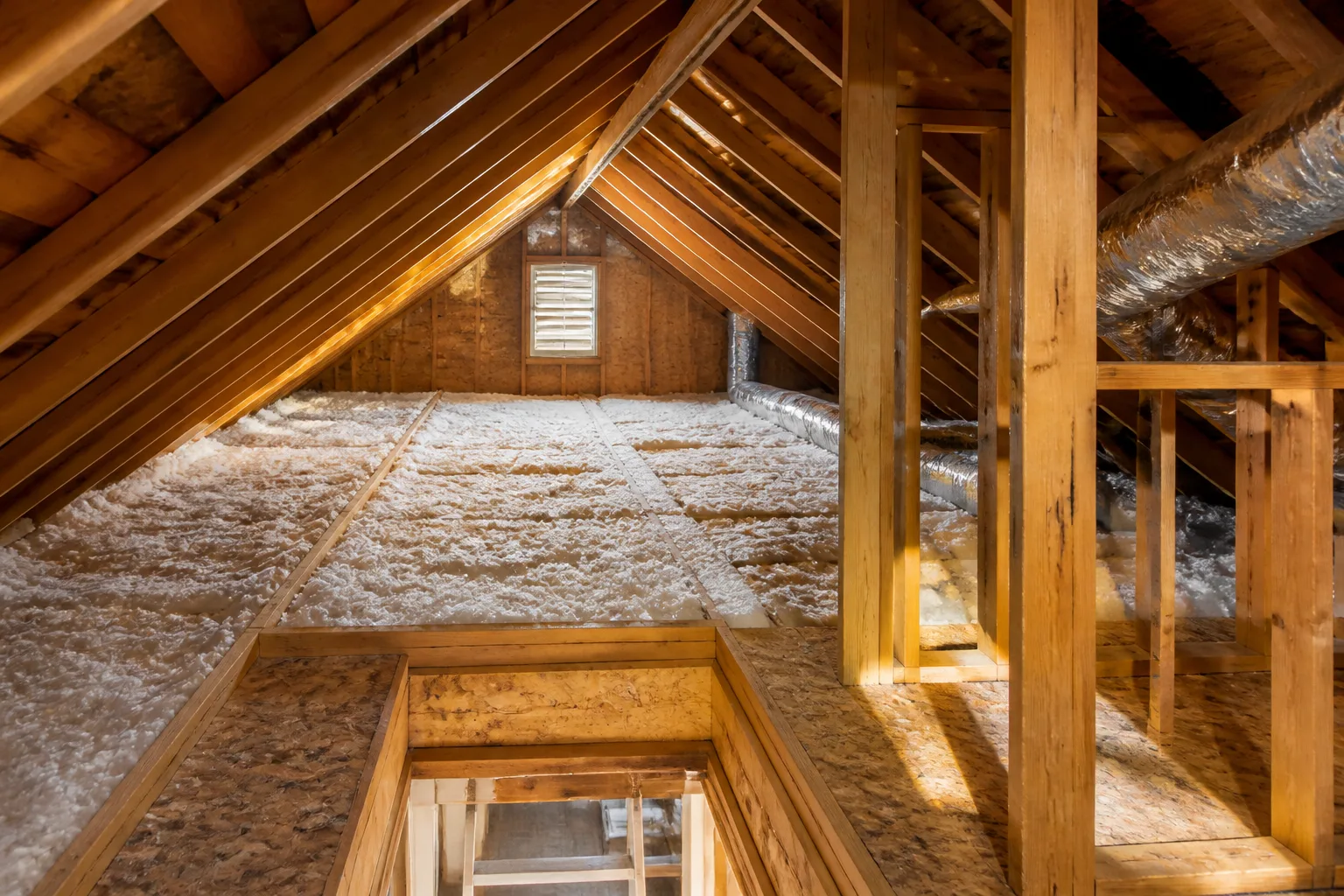
Top Signs You Need Insulation Service – Don’t Ignore These
If your Enterprise home is under 2,000 sq ft and your summer cooling bill clears $280 a month, there’s a real chance your attic insulation is the problem, not the Nevada heat. Most homeowners write off rising bills, ceiling drafts, and uneven rooms as normal. They’re usually not. Below we break down the signs that actually matter, the dollar threshold where leaving them alone costs more than fixing them, and the cheap tests you can run yourself this weekend.
If you’d rather hand it to someone who does this every day, call us at (844) 761-9996 and we’ll set up a free estimate.
Why the Usual “Signs You Need Insulation” Lists Fail Enterprise Homeowners
Every insulation article online lists the same four things: high bills, drafts, uneven temperatures, and a cold house in winter. Those symptoms are real. They’re also so common that people tune them out, especially in Enterprise, where triple-digit summers make a $300 power bill feel normal.
The problem with that list is it gives you nothing to act on. A high bill could mean attic insulation, a failing HVAC unit, duct leaks, or windows. So the signs below are reframed around a threshold instead: the point where the cost of doing nothing is measurably higher than the cost of fixing it. That’s the only comparison that matters.
Here’s the short version of what we look for in Enterprise homes:
- A cooling bill that spikes far faster than the outdoor temperature does, month over month.
- A ceiling that runs hot to the touch in the afternoon while the room below stays cool.
- Insulation that was installed before 2006, when Nevada’s energy code let far less insulation pass.
- Compressed, burrowed, or flattened insulation from rodent activity.
- Radiant heat bleeding down through the ceiling, even with the AC running.
The rest of this post explains how to test each one, with real numbers on what it costs to fix.
Sign #1: The Energy Bill Spike Ratio, Not Just “High Bills”
The single most reliable sign isn’t a big bill. It’s a bill that climbs out of proportion to how much hotter it gets outside. A bill that stays within a predictable band as the weather changes is usually a well-sealed home, even if it’s high. A bill that jumps 40 – 60% from one summer month to the next, in a home under 2,000 sq ft, points at the attic.
Here’s how to run the comparison:
- Pull your last three summer bills and note both the kWh used and the average outdoor temperature for each month.
- If usage is climbing faster than temperature, your envelope is losing cooling.
- Compare the same months against a mildly cooler year. A jump in the newer year, with similar temperatures, points to insulation.
A properly insulated attic floor in Enterprise, typically brought up to R-38 or higher in new construction, holds its performance for years. When a bill ratio like this shows up, it usually means the R-value is below current Nevada Energy Code and the home is paying for it monthly. In our experience, upgrading attic insulation in an under-insulated Enterprise home typically runs $1,400 – $3,200 depending on square footage and whether old material is removed. When a bill is running $60 – $90 high across four to five summer months, that gap pays for itself before the first full year is out.
The trap is blaming the AC. A failing HVAC unit can also spike a bill, but its signature looks different: it usually fails all at once or trips the breaker. Insulation failure is smoother and builds over time.
Sign #2: The 60-Second Ceiling Temperature Test
This is the fastest insulation test we know, and it costs about $15. You need a basic infrared thermometer, the kind you point and click. It reads surface temperature, and surfaces tell you more than the air does.
Run it on a hot afternoon in Enterprise, ideally after 3 p.m. when the attic has soaked up the day’s heat:
- Point the thermometer at the ceiling in a few different rooms.
- Then point it at the interior wall of the same room, in the shade.
- Note the difference.
A gap of 5°F or less between ceiling and shaded wall is usually fine. A ceiling running 10°F warmer, or more, is a real signal of insufficient insulation above. Repeat the test in a room over a garage or under a vaulted ceiling, both of which are common weak spots in Enterprise homes.
Why this works: ceiling surface temperature is a direct read on how much heat is leaking from the attic down into the room. A cool ceiling is a well-insulated ceiling. A hot ceiling is a public notice that you’re paying to cool your attic.
If your ceiling runs hot in one room and cool in another, that’s usually a gap, a compressed section, or a spot where insulation got pushed aside. It’s not a “whole house problem” yet, but it’s worth checking.
Sign #3: Radiant Heat Bleed (and Why Ice Dams Don’t Apply Here)
Ice dams are the classic northern insulation story, and they don’t happen in Enterprise. They need snow on the roof and warm spots under it. Our climate produces the opposite problem: an attic that bakes all day and radiates heat downward into the living space, even after sunset.
You can spot radiant heat bleed this way:
- With the AC running, stand under the ceiling in late afternoon. If the room feels warm overhead while the floor stays cool, that’s bleed.
- After the AC shuts off, does the room warm up again within 20 – 30 minutes? A well-insulated ceiling holds comfort for much longer.
- Does the room feel warmer at 6 p.m. than it did at noon, with the same thermostat setting? That’s heat moving down through the floor of your attic.
Radiant barrier products exist, but in Enterprise the fix is usually simpler: bring the attic floor back up to a proper R-value. In our experience, a well-installed layer of Owens Corning or Johns Manville blown-in insulation over the attic floor, brought to current spec, cuts the effect by a visible margin within days. The exact product matters less than installing it to the right depth, measured, not eyeballed.
If you’re not sure which issue you’re seeing, worth reading more on our Attic Insulation in Enterprise page, or just have us look. The test above takes a minute and we don’t charge for a walkthrough.
Sign #4: Rodent and Pest Damage That Compresses Insulation
This one is on every insulation list, but rarely with the details that matter. Rodents don’t just make noise in your attic. They burrow through insulation and compress it, and compressed insulation loses R-value fast. What looked like R-30 can drop to effective R-10 in the places rodents have been active.
Signs of damage to look for above the ceiling:
- Trails or tunnels in the insulation, typically along joists where mice like to travel.
- Dark, matted, or compressed patches, more common near the eaves and near HVAC penetrations.
- Droppings or nesting material, which is your cue to call a pest professional first.
Order of operations matters here. If rodents are active, the pest issue gets treated before touching insulation. Once the attic is clear, the damaged sections are removed and replaced. Sweeping new material over active rodent damage just feeds them a fresh bed and wastes your money. We pulled a garage pull-down ladder open over in a neighborhood off the 215 last spring and found exactly that: insulation riddled with trails and tunnels, replaced last week by “new” insulation, and already compressed back down in the first month. The previous job was fine; the sequence was wrong.
If you’re seeing signs of compressed insulation, our Blown In Insulation in Enterprise service is designed for topping up an attic with the correct depth and density after pest damage is cleaned out. Every technician arriving at your door is background-checked, in a clean marked uniform, with an ID badge. If anyone else shows up, the visit is free.
Sign #5: A Home Built Before 2006 Is Probably Under Current Code
This is the sign most Enterprise homeowners don’t know to check. If your home was built before 2006, its insulation likely met the code that was in force at the time, and that code allowed significantly less than today’s Nevada Energy Code requires. It was built to a lower standard and it’s still running on it.
That matters for three reasons:
- Comfort: Rooms over garages, upstairs bedrooms, and additions built in that era tend to be the warmest in summer.
- Resale: An attic below current code is the kind of item a buyer’s inspector flags and a seller’s agent budgets for. Fixing it also usually pays part of its cost back on the deal.
- Cost: A top-up on the attic floor is typically far cheaper than the HVAC replacement an under-insulated home eventually needs.
Not sure what year your home was built? It’s on your property record, which Clark County publishes online. If you’re in that pre-2006 band, a free insulation inspection is the sensible next step. Our technicians carry up to 24 years of experience and will tell you plainly whether your attic is under spec, not just assume it is. The material choices we offer, including Rockwool and Knauf alongside Owens Corning, are matched to what your attic actually needs.
How Much Does Insulation Service Cost in Enterprise?
Typical ranges, based on our work in Enterprise homes:
| Service | Typical Cost Range | Best For |
|---|---|---|
| Attic insulation top-up (blown-in) | $1,400 – $3,200 | Under-insulated attic, pre-2006 homes |
| Full attic insulation removal & reinstall | $2,400 – $4,800 | Rodent damage, compressed old material |
| Spray foam insulation (attic deck) | $3,000 – $6,500 | Air sealing tight spaces, ductwork, rim joists |
| Batt insulation replacement (partial) | $700 – $1,800 | Single-room or spot fixes |
Every job we take on gets a written price before any work starts. That price covers labor and materials, and every job is backed by the 365-Day Done Right Promise: if something isn’t right, we fix it, and if a repair fails inside that year, the second visit is free.
When to Call a Pro
Top-ups and batt replacements are almost always best handled by a trained crew. Where we’d stop you attempting this yourself:
- Spray foam: mixing and application require proper ventilation and protective gear. Fumes need respect.
- Active rodent damage: pest control first, insulation second, always. Never the other way around.
- Any attic with existing moisture, sagging decking, or visible electrical work: that’s an inspection, not a DIY job.
If your home ticks more than one sign on this list, or you just want a straight answer, give us a call at (844) 761-9996 and we’ll get a free estimate on the calendar. You’ll get the technician’s name and photo before the visit, and a live person answers the phone whenever you call.
Related services in Enterprise: Spray Foam Insulation in Enterprise if you’re chasing air leaks, or visit the Aspen Attic Insulation Enterprise home for everything we offer.
The Bottom Line
The signs that matter in Enterprise aren’t “high bills” – they’re:
- A bill spike ratio that climbs faster than the temperature does.
- A ceiling that runs 10°F or more warmer than the shaded wall, measured with a $15 infrared thermometer.
- Radiant heat bleeding down even after sunset.
- Compressed or burrowed insulation from rodents.
- A home built before 2006, still running on old code.
If you’re in Enterprise and any of these sound familiar, the fix is measurable and usually far cheaper than the next 12 months of cooling an attic. Aspen Attic Insulation Enterprise offers free estimates. Call (844) 761-9996 and we’ll walk your attic with you and give you a written price before any work starts.
Frequently Asked Questions
The five most reliable signs are a cooling bill that spikes faster than outdoor temperatures, a ceiling that reads more than 10°F warmer than your shaded walls with an infrared thermometer, radiant heat bleeding down into rooms after sunset, compressed or burrowed insulation from rodent activity, and a home built before 2006 that’s likely under current Nevada Energy Code. Call (844) 761-9996 – estimates are free.
Attic insulation top-ups in Enterprise typically run $1,400 – $3,200. Full removal and reinstall runs $2,400 – $4,800, and spray foam typically runs $3,000 – $6,500. Every price is written before work starts, and every job carries the 365-Day Done Right Promise. Call (844) 761-9996 for an exact quote.
Yes. The 60-second ceiling temperature test with an infrared thermometer is the most useful DIY check. Point it at your ceiling and your shaded wall on a hot Enterprise afternoon. A gap of 5°F or less is usually fine; 10°F or more means it’s worth having it looked at. Call (844) 761-9996 if you’d like a free inspection to confirm.
Yes. Rodents burrow through and compress insulation, and compressed insulation loses R-value quickly. R-30 can drop to effective R-10 where rodents have been active. Pest control comes first, then insulation replacement in damaged sections. If you’re seeing trails, matted patches, or droppings, call us at (844) 761-9996 and we’ll tell you how to sequence it.
Written by the team at Aspen Attic Insulation Enterprise.
Need Insulation Help?
Call Aspen Attic Insulation Enterprise - licensed & insured, here with fast after-hours help in Enterprise.
(844) 761-9996