
Preparing Your Home’s Insulation for Winter in Enterprise
Enterprise’s average January low is 34°F. That’s cold enough to make an under-insulated attic cost you $60 – $90 extra per month in heating, but mild enough that most homeowners blame the furnace instead of the ceiling. The fix usually isn’t a new HVAC system. It’s a 90-minute audit you do in October, while the weather is still forgiving and before the first real bill lands. If you’d rather hand that audit to someone who climbs attics for a living, call (844) 761-9996 and we’ll take a look.
Why Enterprise Winters Fool So Many Homeowners
Enterprise sits at the edge of the Mojave, which means our winters are short and mild on paper. Daytime highs in December still flirt with the 50s. That’s exactly why so many homes here go years without anyone thinking about attic insulation. The cold isn’t dramatic, so the heat loss isn’t dramatic either. It’s slow, steady, and invisible.
What actually happens is attic bypass leakage. Warm air from your living space escapes through gaps and penetrations in the ceiling plane, and once it reaches the cold attic, it’s gone. Your furnace runs longer to compensate. The thermostat reading looks normal. The bill doesn’t.
In our experience working Enterprise neighborhoods, the homes hit hardest are the ones built in the big tract phases of the 1990s and 2000s. Insulation was installed to the code of the day, which was often R-19 or R-22 in the attic. Today’s energy code calls for considerably more. A home that passed inspection 20 years ago can be a genuine heat sieve now.
None of this requires a contractor to diagnose. It requires a flashlight, a tape measure, and a Saturday morning.
The 90-Minute October Audit: What to Check and Where
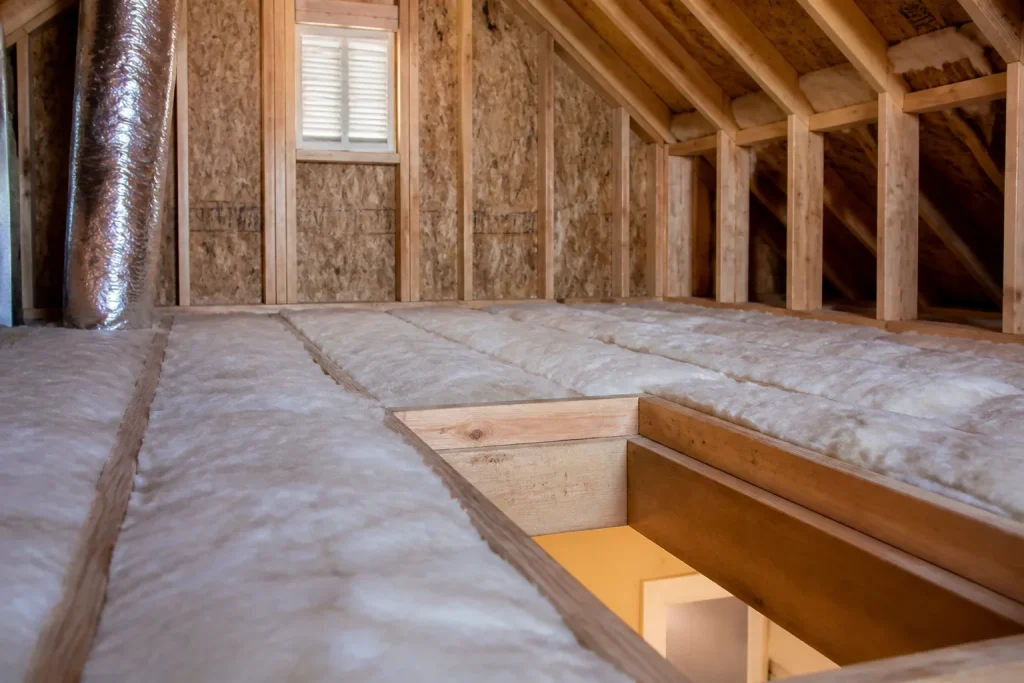
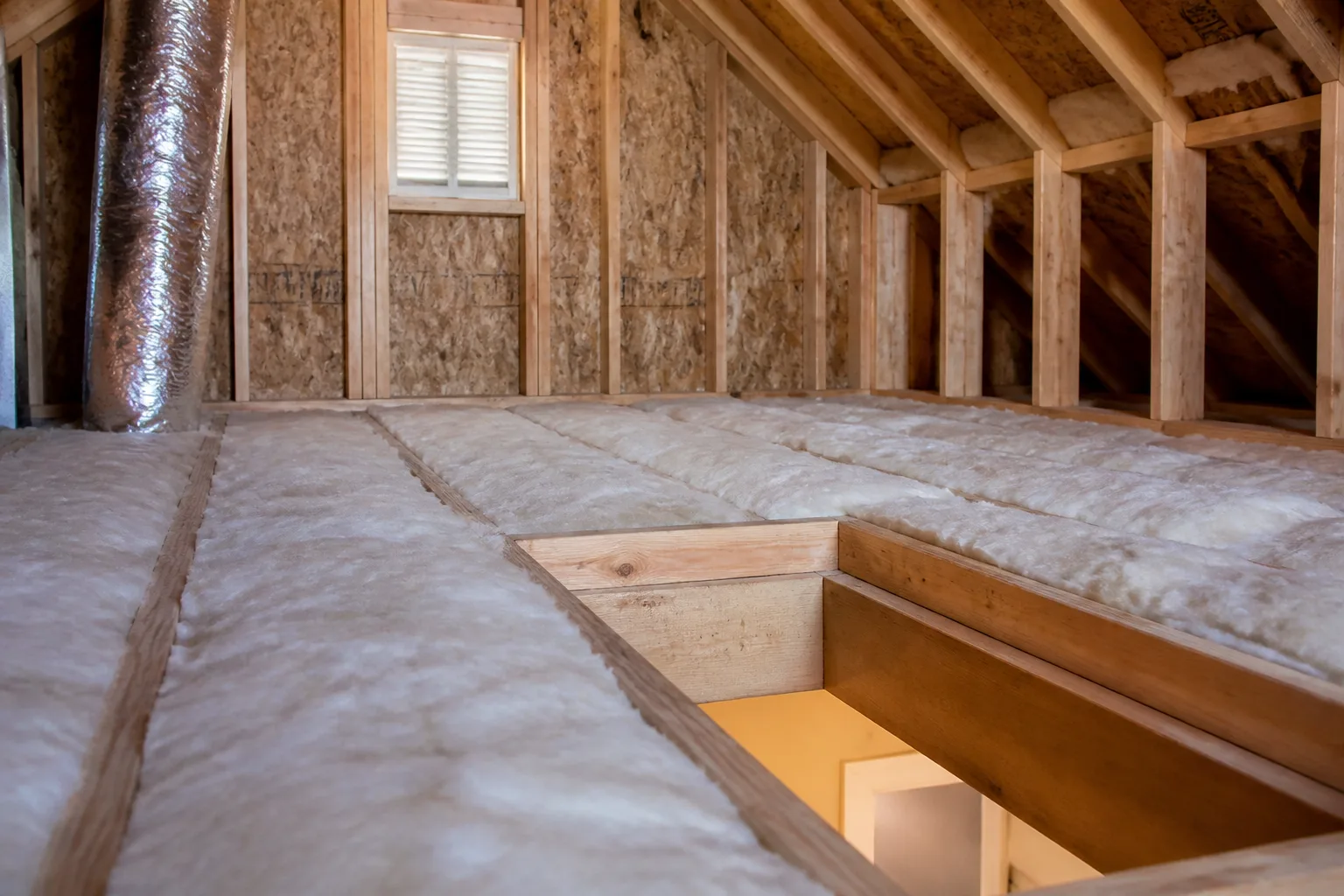
You can find the biggest insulation problems in an Enterprise home in about 90 minutes, and you don’t need to crawl through the whole attic to do it. You need a bright flashlight, a ruler marked in inches (a depth gauge is ideal), and a healthy respect for what you’re stepping on. Wear shoes with grip, keep to the joists, and never step between them.
Here’s the audit, in order:
- Measure the depth of the insulation across the attic floor. Stick your ruler straight down into the material in five or six spots. Note the depth in inches. Fiberglass batts and blown-in cellulose are measured the same way. If you’re seeing 6 inches or less, you’re under-insulated for an Enterprise winter.
- Look at the attic hatch. The hatch is a hole in your ceiling that almost never gets insulated or sealed properly. If the back of the hatch is bare wood, that’s a leak.
- Check around recessed lights. Can lights penetrate the ceiling plane. If you can see daylight or feel moving air around a can light from the attic side, it’s a bypass. Many older cans aren’t rated for direct insulation contact, so don’t stuff insulation against them. Note it and move on.
- Inspect the top plates. The top plate is where your wall framing meets the ceiling. In tract homes, electricians and plumbers drilled and notched these plates during construction. Those holes are open air passages into the attic. Look along the perimeter walls for gaps in the insulation or visible holes in the wood.
- Find the HVAC chase. The chase is the vertical shaft that carries ductwork or flue pipe up through the house. It’s very often unsealed at the attic floor. Warm air pours up through it all winter.
Four locations: attic hatch, recessed lights, top plates, HVAC chase. Those account for most of the heat loss we find in Enterprise tract homes. Jot down what you see. You’ll want those notes when you talk to anyone about the job.
Reading Your NV Energy Bill to Confirm an Insulation Deficit
Numbers beat guesses. Before you spend a dollar on insulation, spend five minutes on your NV Energy bill.
Pull a winter month and a summer month. Winter is the one you care about. Now divide the total kilowatt-hours by the square footage of your conditioned living space (not the garage, not the covered patio). The result is your kWh per square foot for that month.
A code-compliant Enterprise home with decent attic insulation typically lands in the range of 1.5 to 2.5 kWh per square foot for a winter month, depending on how much heating you run and how the house is oriented. If you’re consistently running above 3 kWh per square foot in the same kind of weather, that’s a signal worth investigating.
Here’s the part people miss: a high winter number doesn’t automatically mean bad insulation. It could be an old furnace, duct leaks, or a house full of single-pane windows. But combined with what you saw in the attic audit, it gives you a real picture. If your depth measurement was thin and your bill is running hot, the insulation is the first place to look.
One more thing. NV Energy’s winter rates are tiered, so the more you use, the more each kilowatt-hour costs. A modest heat loss that pushes you into a higher tier can cost far more than the raw kWh would suggest.
Weatherstrip the Attic Hatch: The Highest-ROI Thing You’ll Do This Fall
If you do one thing from this whole guide, weatherstrip the attic hatch. It is the single highest-return action most Enterprise homeowners skip.
The hatch is a door to the outside, in effect. It sits in a hot attic in summer and a cold one in winter, and every time someone goes up there – to store decorations, to check a leak, to run cable – it gets opened. Most hatches have no gasket at all, or the gasket was installed years ago and has flattened into uselessness.
What to use: a closed-cell foam weatherstripping tape, or better, an EPDM rubber gasket rated for repeated compression. Skip the cheap open-cell tape. It holds up for one season and then crumbles. Look for a product rated for outdoor and cold-temperature performance. That’s the spec that survives repeated access and temperature swings without losing its seal.
Apply it to the top edge of the hatch frame, not the lid. That way the lid compresses against it and forms a continuous seal. Then insulate the back of the hatch itself with a rigid foam board or a purpose-made hatch cover. If you don’t want to deal with the fiberglass, this is genuinely one job worth handing off. It’s fast, and the difference in draft is immediate.
Seal First, Then Add Insulation: Why Order Matters
This is the mistake we see most often in Enterprise, and it’s an expensive one. Someone notices the attic is under-insulated, buys a pile of blown-in insulation (loose fibers blown into the attic cavity to fill every gap), and buries the whole ceiling with it. It looks great. The problem is that every bypass, every gap in a top plate, every open chased hole, is now sealed under a layer of insulation that makes it much harder to find and fix.
The correct order is always the same: air-seal first, insulate second.
- Seal first. That means closing the gaps around the attic hatch, can lights (with appropriate covers), top plates, HVAC chases, and any other penetrations in the ceiling plane. Caulk, foam, or rigid barriers, depending on the opening.
- Then insulate. Once the air leaks are closed, adding insulation actually does what it’s supposed to do: covers the ceiling plane so heat has to fight its way through a thick blanket instead of escaping through a door you forgot was open.
Doing it backwards – insulation over bypasses – locks the leak in place permanently. You then need to pull up material to find and fix it. We pulled up a pile of blown-in over in one of the older tract sections of Enterprise last season, and the top-plate bypasses underneath were like chimneys. The homeowner had added insulation three years earlier and couldn’t figure out why the bill hadn’t moved.
If you’re adding season after season, or you don’t trust yourself to find all the bypasses, this is the part worth calling in a pro for. If you’d like us to take a look, our attic insulation services in Enterprise cover the whole audit and sealing process.
What Our Pre-Winter Inspection Covers (and What It Costs)
When we come out for a pre-winter inspection in Enterprise, here’s exactly what happens and what you get in writing before a single dollar is committed.
What the inspection covers:
- Attic depth measurement in multiple locations
- A visual check for air leaks at the hatch, recessed lights, top plates, and HVAC chase
- Signs of moisture, pest entry, or compressor damage to existing insulation
- An honest read on whether you need a repair, an addition of insulation, or nothing at all
What the written quote contains: a line-item price, the specific products we recommend, and a full scope of what we’ll do. That means you know what’s going in (we work with a core set of premium brands like Knauf, Rockwool, CertainTeed, and Icynene, matched to the job rather than a one-size approach), how much it costs, and what’s covered. The 365-Day Done Right Promise backs every job that we do, so if something fails within a year, we come back and make it right at no charge. Free second visit if it’s ever needed.
Who shows up: this is the part we care about most, because some homeowners are home alone or managing the house with young kids. Every technician is background-checked, identity-verified, arrives in a clean marked uniform, and shows a photo ID badge at the door. We send the technician’s name and photo to you before the visit. If anyone else arrives, the visit is free and we make it right. That’s part of what we call The Threshold Standard.
If any of this sounds unfamiliar, or the notes from your audit are raising questions, that’s a normal place to start. Call us and we’ll walk through it with you.
Related Services in Enterprise
Depending on what your audit turns up, you may be looking at a simpler job than you think. If your attic just needs a fill and seal, blown-in insulation in Enterprise is usually the most practical route for a typical tract home. If you’ve got an unusual layout, a vaulted ceiling, or a crawl space above an addition, spray foam insulation in Enterprise may make more sense, because it seals and insulates in one step. You can start at our Enterprise home page to see how we approach the whole category. Our technicians have up to 24 years of experience in this kind of work, and they’ve seen almost every configuration Enterprise has.
What happens when you call
- 1
A real person answersNo phone trees – you reach a local pro.
- 2
You get an upfront price rangeHonest numbers before anyone is dispatched.
- 3
A background-checked tech heads outLicensed & insured, dispatched right away.
- 4
You approve before work beginsNothing starts until you say go.
The Bottom Line
Enterprise winters don’t have to be expensive. The homes that struggle with heating bills almost always have the same four problems – an unsealed attic hatch, unsealed can lights, leaking top plates, and a perforated HVAC chase – and they can be found in about 90 minutes with a flashlight and a ruler.
The order matters: seal first, insulate second. Skipping that order costs twice as much in the long run, and it’s one of the most common mistakes we see in Enterprise. If you’d rather have a trained eye do the audit, or if the bypasses need closing before any insulation goes in, we’re happy to help. We’re in Enterprise, we’re licenced and covered by our written promise, and if you’re in Enterprise and need help, Aspen Attic Insulation Enterprise offers free estimates. Call (844) 761-9996.
Frequently Asked Questions
Most Enterprise attic jobs fall in the range of $1,800 to $4,500, depending on square footage, whether air sealing is needed first, and the material. Air sealing around the hatch, top plates, and HVAC chase is typically the most cost-effective portion. Call (844) 761-9996 for an exact quote – estimates are free, and we put the price in writing before any work starts.
A code-compliant and well-insulated Enterprise home usually lands around 1.5 to 2.5 kWh per square foot for a winter month, dividing total kWh by conditioned square footage. If you’re consistently running above 3, it’s worth an attic inspection. Call (844) 761-9996 if you want us to take a look.
Seal first, always. Insulating over unsealed bypasses locks the air leak in place and makes it much harder to find later. Seal the hatch, can lights, top plates, and HVAC chase before any blown-in material goes in. Call (844) 761-9996 if you’re not sure what you’re looking at up there.
We send the technician’s name and photo to you before the visit. They arrive in a clean marked uniform and show a photo ID badge at the door. If anyone else shows up, the visit is free and we make it right. That’s the Threshold Standard, and it applies on every visit. Call (844) 761-9996 to schedule.
Written by the team at Aspen Attic Insulation Enterprise.
Need Insulation Help?
Call Aspen Attic Insulation Enterprise - licensed & insured, here with fast after-hours help in Enterprise.
(844) 761-9996