
Knauf Attic Insulation in Enterprise: A Homeowner’s Guide
Most Enterprise homeowners have never heard of Knauf, yet there is a good chance Knauf fiberglass is sitting in their attic right now. Knauf supplies a large share of the insulation Nevada contractors install, and its EcoBatt and blown-in products show up in homes across the valley without any homeowner ever asking for them by name. The bigger problem: Knauf backs much of its insulation with a 50-year limited product warranty, and most people lose it without knowing they had it. This guide is about identifying what you already have, checking whether it still meets spec, and knowing when to top it off.
No climbs into the attic required to read this. But if you would rather have someone look for you, call us at (844) 761-9996 and we will tell you what is up there.
Key Takeaways
- Knauf EcoBatt uses a formaldehyde-free binder, which matters more in an Enterprise attic with HVAC equipment than most marketing copy admits.
- Zone 3B Nevada target is roughly R-38 to R-49 for an attic floor; many Enterprise homes sit well under that after settling.
- The 50-year Knauf warranty is tied to product registration and installer paperwork, so keep both.
- A top-off usually costs far less than a full replacement and can be done in a single visit.
How Do I Know If I Already Have Knauf Insulation in My Attic?
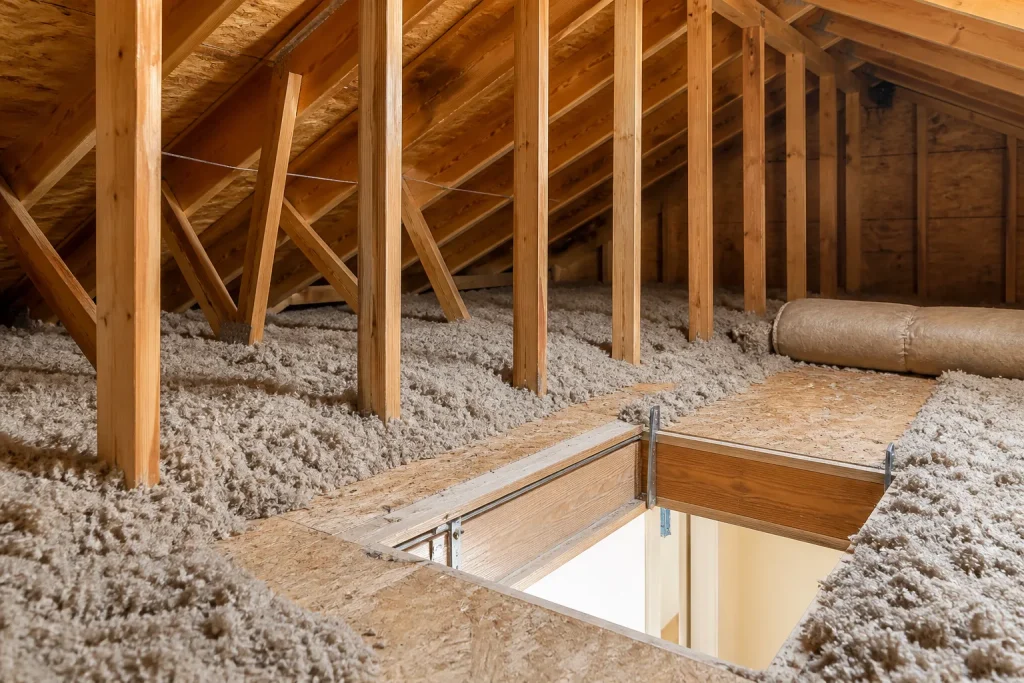
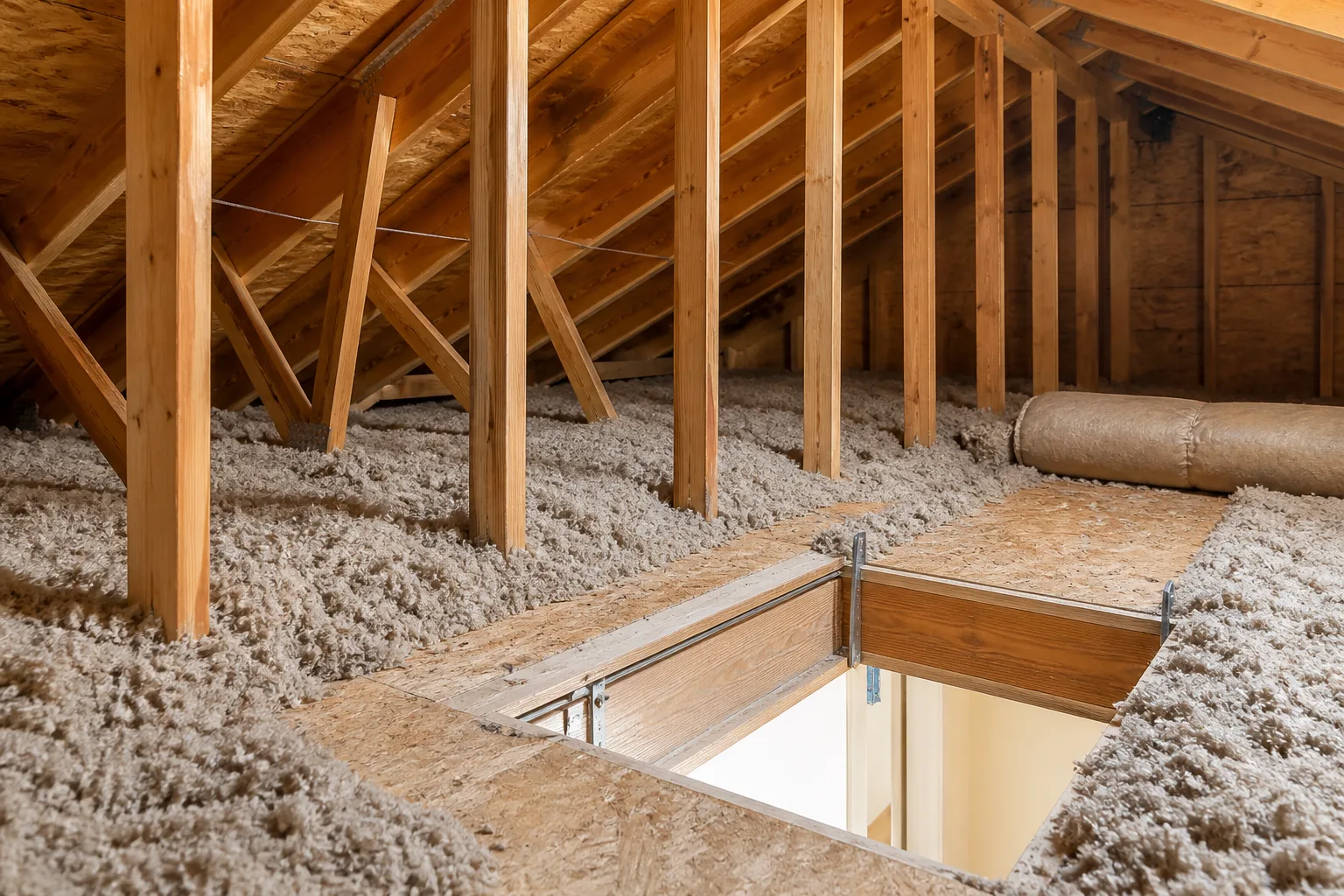
Knauf insulation is identifiable in about ten minutes with a flashlight and a phone camera. Knauf EcoBatt batts carry a printed facing or kraft backing with the Knauf name and an R-value, and loose-fill Knauf fiberglass tends to read as a light, consistent fiber with fewer clumps than older cellulose. In our experience pulling attic samples around the valley, the giveaway is usually an empty bag or two left near the hatch.
Here is what to look for before you start guessing:
- Batts: Look for printed facing that says Knauf, EcoBatt, or a visible R-value stamp. Knauf batts are typically light tan or off-white fiberglass with a uniform texture.
- Loose-fill: Knauf blown-in fiberglass is fibrous and airy; cellulose is denser, grayer, and usually has visible paper flecks.
- Packaging remnants: Contractors routinely leave crumpled bags or banding near the attic access. That bag is your receipt.
- Depth: Measure insulation depth in several spots with a tape or ruler. Consistent depth suggests a proper install; uneven drifts suggest settling or a rushed job.
If you find a Knauf bag but no paperwork, you are not alone. Most Enterprise homes we inspect were insulated before the current owner moved in, and the documentation never survived the sale. Take a few photos of the attic, the bag, and the depth, then call us if you want a second opinion on what you are looking at.
What Makes Knauf EcoBatt Different for an Enterprise Attic?
Knauf EcoBatt uses a formaldehyde-free binder, so the fiberglass does not off-gas the way older binder formulations could. That matters in Enterprise specifically because so many homes here run ductwork and air handlers through the attic. In our hottest months, that attic air reaches temperatures that can push past 130°F against the roof deck, and any air leaking through the attic into your living space carries whatever is in that attic with it. A binder that does not introduce formaldehyde into that air path is a quiet improvement, not a marketing gimmick.
Other things we have noticed working with Knauf in Enterprise attics:
- It cuts clean and stays put. EcoBatt holds its shape in batts, which helps on sloped framing and around duct chases where cheaper stuff sags over time.
- It resists sag better than standard light fiberglass. Sagging opens gaps at the top plate, and gaps are where heat moves.
- It pairs well with air sealing. Knauf batts perform best when the attic floor is sealed first, which is why we seal before we insulate on every job.
We stock Knauf alongside Owens Corning, Johns Manville, Rockwool, CertainTeed, Icynene, Demilec, and GreenFiber, so we are not tied to a single brand. We pick the material that matches the job, not the one that is easiest to sell.
Does My Existing Knauf Installation Meet the Original Spec?
Probably not. Fiberglass settles, batts get compressed during other trades’ work, and ceilings get cut for recessed lights or new HVAC runs. The original installer may have hit spec on day one, and the attic has quietly drifted below it since. The check is simple: measure insulation depth in five or six spots and compare against the target for our climate zone.
Enterprise sits in Zone 3B, and the practical target for most attics here is R-38 to R-49. Rough depth-to-R-value for Knauf blown-in fiberglass:
- R-30: about 9 inches of loose fiberglass
- R-38: about 11 to 12 inches
- R-49: about 14 to 15 inches
If your measured depth comes in under the target that matches your home’s heating and cooling loads, you have your answer. We regularly pull readings in Enterprise homes that are sitting at 5 or 6 inches where 12 was installed years ago. Batts that have been walked on show the same thing: compressed fiber, lower R-value, higher summer bills. A depth reading and a few photos are enough to tell you whether a top-off is worth pricing. Our attic insulation in Enterprise page walks through the full assessment we run.
How Does the Knauf 50-Year Warranty Actually Work?
Knauf offers a 50-year limited product warranty on qualifying insulation, and it covers the product itself, not the labor. The catch is that activation and proof of purchase fall on the homeowner. Most Enterprise homes we look at have no receipt, no registration, and no installer name on file, which means the warranty exists on paper and not in practice. If a defect ever surfaces, that paperwork is the difference between a replacement batt and a shrug.
- Keep the original invoice. The installer’s invoice should name the product and R-value. A handwritten line item saying “attic insulation” is not enough.
- Register the product if Knauf requires it. Registration links the product to your address and purchase date, which is the paper trail.
- Photograph the install. A few photos of the bags, the depth markings, and the finished attic cost you nothing and settle most arguments later.
- Hire a licensed, insured installer. Labor problems are not covered by the product warranty, so the installer’s own guarantee is your protection for workmanship. Ours is the 365-Day Done Right Promise: 365 days, in writing, covering labor and materials, with a free second visit if a repair fails.
The takeaway is simple. If you have Knauf in your attic, track down whatever paperwork you can. If you are planning an install, ask the contractor to hand you the invoice, the product documentation, and a written guarantee before the crew leaves.
Knauf vs. Owens Corning vs. Johns Manville: Which Is Right for a Top-Off?
For a top-off, all three brands work, and the best choice usually comes down to what is already installed. In Enterprise, where attic temps run high for months, the small differences in fiber density, binder, and compression recovery matter more than the brand logo on the bag. Here is how they compare in the conditions we actually see:
- Knauf: formaldehyde-free binder, consistent batt density, good for attics with HVAC equipment and homeowners who care about indoor air. Strong warranty if it is registered.
- Owens Corning: the most widely available brand in the valley, with a broad R-value lineup and predictable performance. Excellent for blown-in top-offs where anything under R-49 needs to be brought up.
- Johns Manville: a solid batt line and a well-documented specification sheet. Reliable for replacement work where the framing is tight and batts need to fit precisely.
Practically, if your attic is Knauf, top it off with Knauf. If the existing fiber is Owens Corning or JM, match that brand where it makes sense and use Knauf if the attic has HVAC runs or you are sensitive to the binder. Our blown-in insulation in Enterprise page explains how we blend brands for a uniform R-value across the whole attic floor, and our spray foam insulation in Enterprise page covers the air-sealing option that often pairs with a top-off.
When Should You Call a Pro Instead of DIY?
You can measure depth, photograph bags, and read a warranty sheet yourself. That is the homeowner part. Where we draw the line is the actual install, and not because we are precious about it. Attic work in Enterprise during summer is dangerous work: temperatures in the attic cavity routinely climb past what a body can safely tolerate, and a fall through a ceiling joist is a real injury. Air sealing around recessed lights and flue penetrations has to be done with materials rated for the heat and clearance; using the wrong foam can create a fire hazard.
We have pulled enough botched DIY top-offs out of attics around Enterprise to know the failure modes. A missing baffle at the eave blocks airflow, a bagged recessed light gets buried, or the insulation goes in unevenly and leaves the whole job short of the target. It looks fine from the hatch and it is not. Call us if you have any of the following:
- Measured depth is well under R-38 and you want it brought to spec.
- You can see gaps, sagging batts, or daylight around the framing.
- You cannot find paperwork for existing insulation.
- You want the install done with a written price, a background-checked technician, and a 365-day guarantee behind it.
Related services in Enterprise
If you are figuring out what your attic needs, our attic insulation in Enterprise, blown-in insulation in Enterprise, and spray foam insulation in Enterprise pages cover the three services we run here, and our Aspen Attic Insulation Enterprise home page is a good place to start.
The Bottom Line
Knauf is quietly one of the most common brands in Enterprise attics, and it deserves better than the silence it usually gets. If you have Knauf EcoBatt or Knauf blown-in up there, the three things worth checking are the depth, the binder on any new product you add, and the paperwork for the 50-year warranty. Match the R-value to our climate zone, register the product, and keep the install documentation where you can find it. If you are topping off, match the brand where you can and do not skip air sealing; the insulation cannot perform over gaps.
If you would rather have someone check for you, we send a technician by name and photo before the visit, hand you a written price before any work starts, and back the job with the 365-Day Done Right Promise. If you are in Enterprise and need help, Aspen Attic Insulation Enterprise offers free estimates. Call (844) 761-9996.
Frequently Asked Questions
Look for printed facing that says Knauf or EcoBatt on the batts, a light, fibrous loose-fill material, or an empty Knauf bag left near the attic hatch. Measure depth in several spots and photograph what you see. If you want confirmation, call (844) 761-9996 and we will walk you through it or come out.
Knauf offers a 50-year limited product warranty on qualifying insulation, but it covers the product rather than the installation labor. Most homeowners lose the protection because they do not keep the original installer invoice or register the product. Keep both, and make sure your installer hands over a written workmanship guarantee as well.
Knauf EcoBatt is a good fit for Enterprise attics with HVAC equipment because of its formaldehyde-free binder. Owens Corning is the most widely used brand locally and works well for blown-in top-offs, and Johns Manville is a solid choice for tight framing where batts must fit precisely. For a top-off, matching the existing brand matters less than hitting the right R-value. Call (844) 761-9996 for a free assessment.
Enterprise is Zone 3B, so the practical target for most attics is roughly R-38 to R-49, or about 11 to 15 inches of blown-in fiberglass. We can often get an assessment on the schedule same day or next, and estimates are free. Call (844) 761-9996 and we will tell you what is realistic for your attic.
Written by the team at Aspen Attic Insulation Enterprise.
Need Insulation Help?
Call Aspen Attic Insulation Enterprise - licensed & insured, here with fast after-hours help in Enterprise.
(844) 761-9996