
Johns Manville Attic Insulation in Enterprise: A Homeowner’s Guide
Johns Manville makes some of the most widely installed attic insulation in Enterprise, and most homeowners here have no idea it’s up there. If your house went up in one of the newer developments off Silverado Ranch or along the southeastern edge of the valley, there’s a good chance a Johns Manville (JM) product was blown or battened into your attic by a production crew. That matters, because knowing the brand, the installed R-value, and the warranty terms gives you real leverage when you’re deciding whether to top off, repair, or replace what you already have.
If you’re in Enterprise and just want the short version, call us at (844) 761-9996 for a free estimate. The rest of this guide is about helping you understand what’s in your attic before any contractor, ours included, quotes you a number.
Why Johns Manville Shows Up So Often in Enterprise Attics
Johns Manville doesn’t have Owens Corning’s brand recognition with homeowners, but it’s a heavyweight in commercial and production building. That’s the key detail for Enterprise. A lot of the tract homes and planned communities that filled out the southern and eastern parts of the valley were built by production builders who buy insulation by the pallet, spec it by R-value, and install whatever their supplier stocked. JM’s blown-in and batt lines were in heavy rotation throughout that period.
What that means practically:
- Every home in the same development was likely built to the same insulation spec. Your neighbor’s attic is a reasonable clue to what’s in yours.
- Builder-grade installs meet the code minimum, not the ideal for Zone 3B heat. What passed inspection at construction is often less than what you’d choose today.
- The original product code, if you can find it, tells you exactly what was specced, which is a stronger starting point than a contractor guessing from depth alone.
We’ve pulled open attics in Enterprise where the homeowner swore the house had “generic builder insulation” and found a clearly stamped JM product the whole time. You just have to know what you’re looking at.
How to Identify Johns Manville Insulation Already in Your Attic
You can usually figure out whether you have Johns Manville insulation without calling anyone. Here’s what to look for when you’re up there (and please wear a mask and gloves, and don’t step through a ceiling).
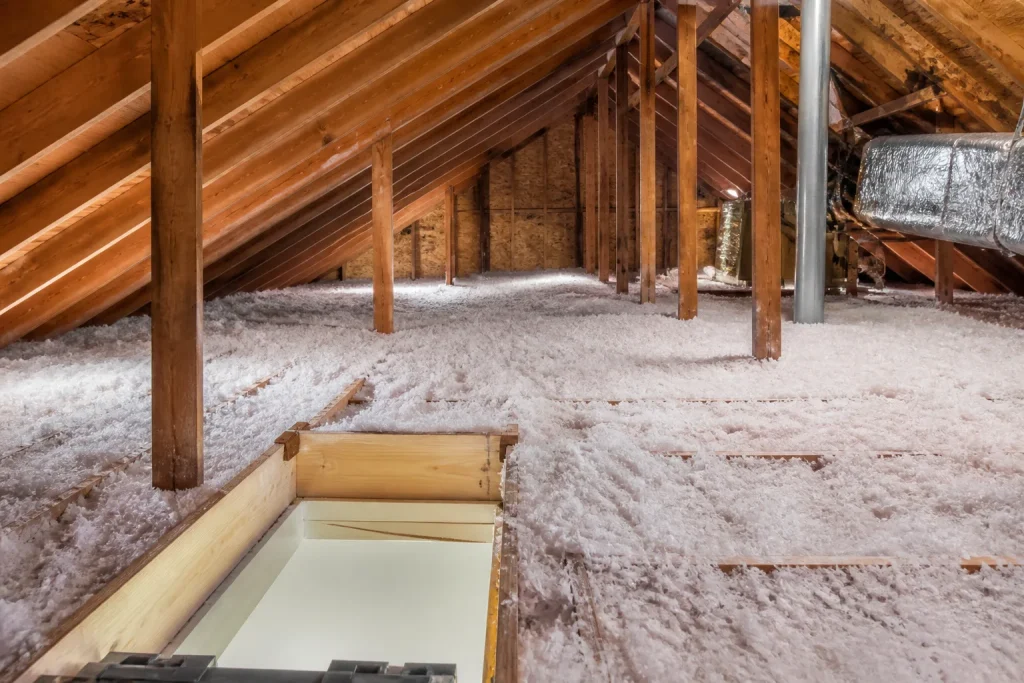
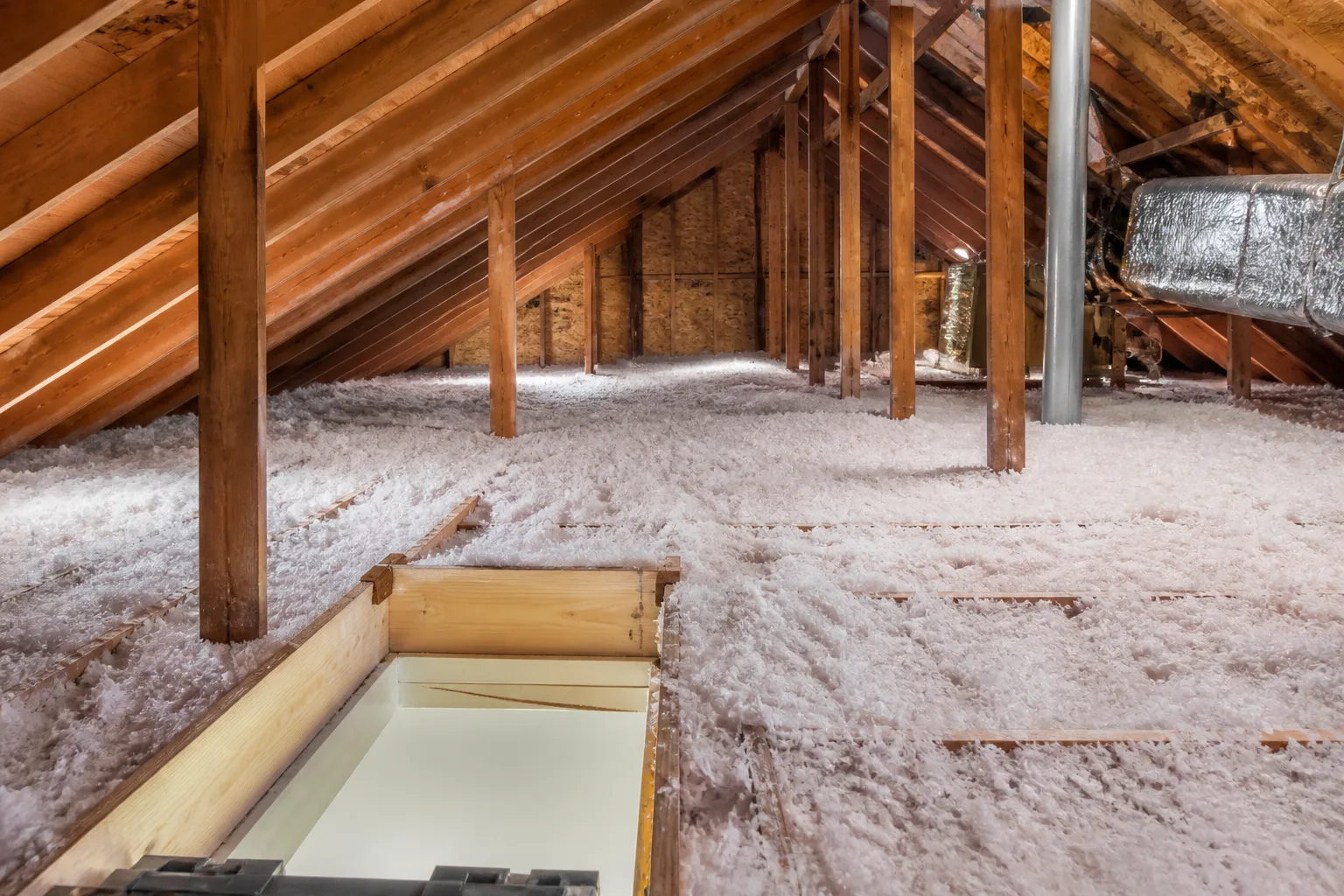
- Blown-in fiberglass color. JM’s fiberglass blown-in tends to read as a light pink-to-off-white, sometimes with visible fiber clumping. That’s not exclusive to JM, but it’s a clue.
- The binder and markings. Many JM blown-in products carry printed markings on the bag that get tossed, but installers leave intact batts in knee-wall areas or near the hatch. Look for a kraft or foil facing with a company mark and product name.
- Product codes. JM batts typically have a printed code on the facing that names the product line and the R-value per batt. Write that code down before anything gets disturbed.
- Depth and density. Use a tape measure from the ceiling joist top to the insulation surface at several spots. Inconsistent depth across the attic usually signals a blown-in install that settled or was topped off unevenly.
Documenting what you have before a contractor touches anything is the single most useful habit we can suggest. It’s also the difference between a top-off quote that matches your material and one that quietly introduces a product that doesn’t belong there.
Climate Pro Blown-In vs. JM Batts: What’s Actually in Enterprise Attics
Both show up, but which one you have depends on when and how your home was built. Production builders doing fast, wide open attic spaces often went with blown-in fiberglass because it’s quick and fills irregular framing well. Batts are more common in older or custom construction, and in attics with a lot of ductwork or bracing that makes blowing difficult.
Which one performs better in Enterprise’s climate? For most attics here, blown-in wins. Enterprise sits in a hot-dry environment that bakes attics for months, and a fully covered, consistent blown-in blanket handles that better than batts that get compressed around obstacles or pulled away from edges. Compressed or gapped batts lose R-value fast in heat. The trade-off is blown-in settles over time, so depth matters and it should be checked periodically.
We install blown-in insulation regularly in Enterprise specifically because so many attics here have the framing layout that blown-in handles well. If you’re trying to decide between the two approaches, the Blown In Insulation in Enterprise page lays out the trade-offs more fully. For a broader look at options, our Attic Insulation in Enterprise page covers materials and what each is good for.
R-Value Per Inch and Why Depth Requirements Differ in Enterprise
Attic insulation gets specified as an R-value, which measures resistance to heat flow. The thing homeowners miss: the same R-value requires a different depth depending on the material. Fiberglass blown-in needs more depth to hit a given R than some other products; closed-cell foam needs far less. So when someone tells you “you’ve got R-30 in there,” the depth that adds up to R-30 depends on what material it is.
This is where Johns Manville’s published specs earn their keep. JM publishes R-value-per-inch for each product line, which lets you calculate what’s actually installed from the measured depth. Roughly, fiberglass blown-in lands in the low-to-mid 2s per inch of settled depth; use the product’s published number, not a rule of thumb, when you’re doing the math for your own attic.
Enterprise’s heat means the local target for attic R-value runs higher than what many northern-climate installs use. A house that was built to a minimum spec for this region may still fall short of what keeps a summer electric bill reasonable. If you’re comparing a repair against a full upgrade, the honest question is “what R-value do I actually have” before “what’s it going to cost.”
Matching JM Material for a Top-Off (and Why Mixing Goes Wrong)
If you already have Johns Manville blown-in and want to add more, the smart move is to top it off with a compatible product from the same or functionally similar line. Mixing incompatible blown-in products is where thermal performance gets messy. Two reasons:
- Different densities behave differently. A heavier product blown over a lighter one can compact the layer below, so your final R-value is less than the depth suggests.
- Settlement rates don’t match. If the new material settles faster than the old, you can end up with thin spots at the same time you think you’ve fully covered the attic.
Matching the product means the installed R-value adds up predictably and the coverage stays even across the attic. It’s a small detail we insist on in Enterprise because a top-off that looks thick but doesn’t deliver the R-value is wasted money. When we quote a top-off, we write down what’s in the attic and what we’re adding, so you can see the math before any work starts.
JM’s Manufacturer Warranty vs. Your Installer’s Workmanship
Here’s a gap homeowners get caught in: the manufacturer and the installer cover different things, and the hole between them is where disputes live.
What Johns Manville covers: The manufacturer’s warranty concerns the product itself. If a JM insulation product has a manufacturing defect, JM will stand behind the material. That’s what the warranty is for.
What the manufacturer does not cover: The manufacturer is not responsible for how the product was installed. Under-blown depth, uneven coverage, compression around ductwork and framing, moisture intrusion from building problems – none of that is a manufacturing defect, and none of it is a manufacturer warranty claim.
What your contractor should cover: Workmanship. The installer who put the material in is on the hook for whether it was installed correctly, whether it settled prematurely, and whether it’s delivering the R-value they quoted. Ask for that workmanship coverage in writing before work begins.
That’s a big part of why every job we do carries our 365-Day Done Right Promise, in writing, covering labor and materials, with a free second visit if something fails. If the product’s fine but the install wasn’t, the manufacturer won’t help you. The installer should. Get it in writing so there’s no argument later.
When to Call a Pro
Some of this you can check yourself. Measure your depth, look for product markings, and note the settled condition. But there’s a point where an attic stops being a weekend inspection and becomes a safety job. Loose-fill fiberglass and any foam-off-gassing deserve ventilation and protective gear. Crumbling, hidden wiring, and anything that looks damaged aren’t for a homeowner to poke around. There’s also a lot of heat up there in Enterprise in summer.
The honest recommendation: if your depth measurement is well short of where you want to be, or you can’t identify the product, or you’re weighing a top-off against a full replacement, get eyes on it. We’ll measure what you have, tell you the brand and the R-value if we can identify it, and give you a written price before any work starts. Call (844) 761-9996 and a live person will pick up, day or night. We’ll send you your technician’s name and photo before the visit, and every tech is background-checked and arrives with a photo ID badge and a clean marked uniform.
The Bottom Line
If your Enterprise home was built by a production builder, there’s a strong chance Johns Manville insulation is already in your attic, meeting a code minimum that was never meant to be permanent. The useful next step isn’t a sales pitch, it’s information: find the product markings, measure the depth, match the material if you top off, and get the workmanship coverage in writing alongside the manufacturer’s warranty. We’ve seen how much difference that makes for Enterprise homeowners deciding between a small fix and a real upgrade.
Need help figuring out what’s in your attic? Aspen Attic Insulation Enterprise offers free estimates. Call (844) 761-9996, we’ll give you a written price before any work starts, and you’ll know exactly who’s coming to your door before they knock. If you’re still exploring your options, start at our Aspen Attic Insulation Enterprise home page or look into Spray Foam Insulation in Enterprise if you’re considering foam for a harder-to-insulate space.
Frequently Asked Questions
Look for product markings on intact batts, typically printed on the kraft or foil facing with the product line and R-value. Blown-in fiberglass is harder to identify by sight alone, but JM’s product tends to read as light pink-to-white fiberglass. Write down any product code you find and measure your settled depth. If you’re not sure, an installer can identify it. Call (844) 761-9996 for a free estimate.
Yes, provided it’s installed at the right depth and R-value for this region. JM’s published R-value-per-inch specs let you calculate whether your installed depth meets the target for hot-dry climates. The product is capable; the common failure in Enterprise attics is an under-depth builder install or settled material, not the brand. Call (844) 761-9996 and we’ll measure what you have.
You can, but you’re better off matching the existing product or using a functionally compatible one. Different densities and settlement rates can compact the layer below and leave thin spots, so your final R-value comes up short of what the depth suggests. Matching keeps the math honest. Call (844) 761-9996 and we’ll tell you what’s compatible with what you have.
Usually repair or top-off is cheaper if the existing material is in good shape and just short on depth or coverage. Replacement makes sense when the material is damaged, contaminated, or so inconsistent that topping off won’t fix it. The only way to know is to look. Call (844) 761-9996 for a free estimate with a written price before any work is done.
Written by the team at Aspen Attic Insulation Enterprise.
Need Insulation Help?
Call Aspen Attic Insulation Enterprise - licensed & insured, here with fast after-hours help in Enterprise.
(844) 761-9996