
Last updated November 18, 2026
How Long Does Attic Insulation Take? Timelines and What to Expect
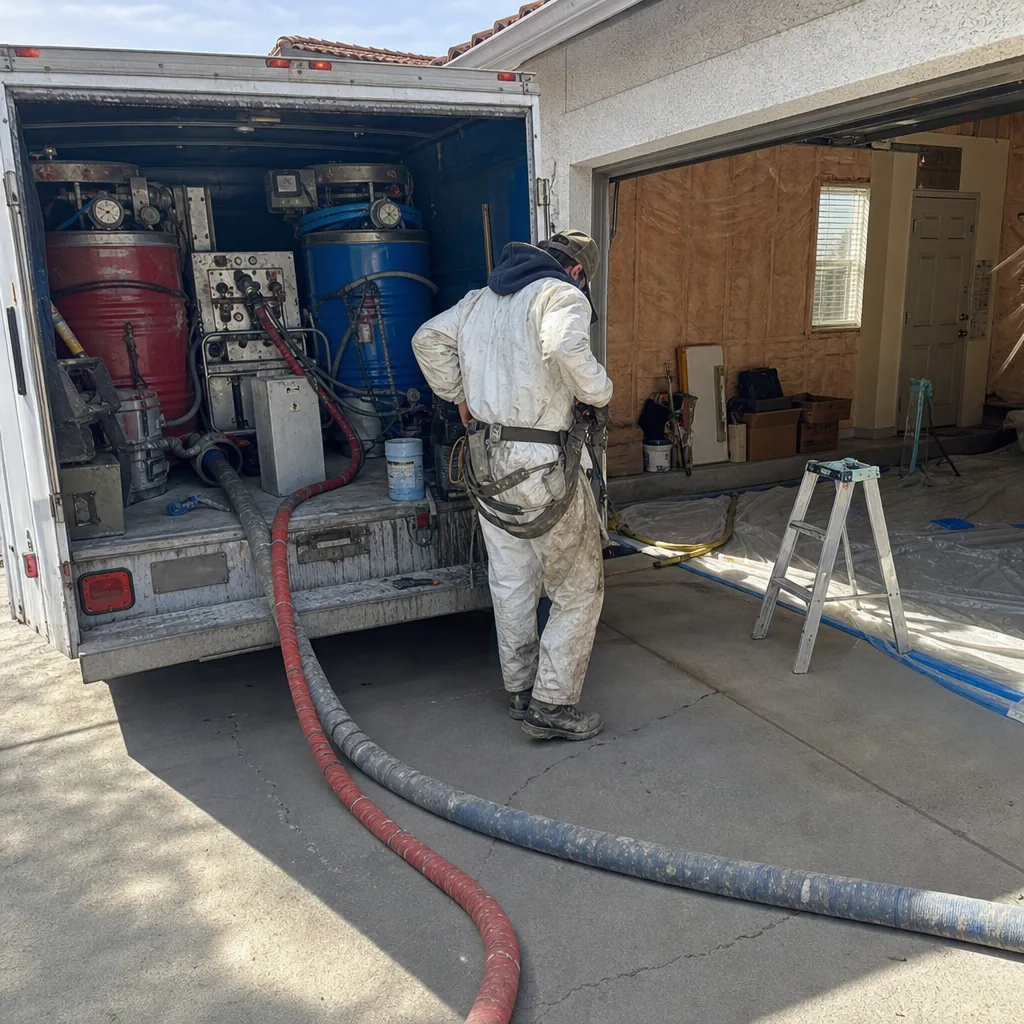
A crew can blow insulation into a typical attic in about 90 minutes. The air-sealing that makes that insulation actually perform takes another two hours, and most low-bid jobs skip it entirely. That’s why the question “how long does attic insulation take” is really a quality-screening question in disguise. If a quote promises a full day’s worth of work completed in 45 minutes, something got left out of the scope. In this guide we’ll break the timeline into the three clocks homeowners actually care about, explain why attic access and existing equipment can double a job, and show you how to read a quote so you know which crew and which timeline you’re buying. We do this work across Enterprise every week, and the honest answer depends heavily on what a crew finds when they open the hatch.
Quick Answer
Most attic insulation jobs in Enterprise finish in 2 to 6 hours for a straightforward blown-in top-up, 4 to 8 hours for full removal and replacement, and 1 to 2 days for a complete spray foam application, depending on attic size, access, and how much prep the space needs. Add time on top of that before you can safely re-enter the attic (immediate for blown-in, 24 to 72 hours for spray foam off-gassing) and before you see savings on your bill (usually one to two billing cycles).
Table of Contents
- The Three Timelines Homeowners Actually Care About
- How Long by Insulation Type
- What Makes a Job Take Longer
- The “One-Day Job” and Crew Size
- When You Can Safely Use the Attic Again
- When You’ll See the First Lower Utility Bill
- How to Read a Quote and Screen the Timeline
- Common Mistakes to Avoid
The Three Timelines Homeowners Actually Care About
When a homeowner asks us how long attic insulation takes, they’re usually bundling three separate questions into one. Untangling them makes the answer far more useful.
Clock 1: How long is the crew in my house? This is the work-in-progress clock, and it’s the one most quotes describe. For a blown-in top-up it can be a couple of hours. For a full removal it can stretch toward a full day.
Clock 2: How long before I can use the attic again? This is a safety clock and it varies sharply by material. Blown-in fiberglass or cellulose is ready the moment the crew leaves. Spray foam can off-gas for a day or more, which matters if anyone in the house is sensitive to odors or if you’re planning to store anything up there.
Clock 3: How long before I see a lower utility bill? This is a results clock, and it’s shaped by billing cycles rather than by crew hours. Most homeowners see the change on their next full bill, though a couple of months can pass depending on where in the cycle the job lands.
Once you can separate these three, a quote becomes far easier to evaluate. A crew that tells you the job takes “three hours” may only be answering Clock 1, and quietly skipping the air-sealing that actually drives Clocks 2 and 3.
How Long by Insulation Type
Insulation type is the single biggest driver of the timeline. Here’s how the three main jobs we do in Enterprise break down.
- Blown-in top-up (adding to existing insulation): 2 to 4 hours for a typical single-story attic. Blown-in insulation, meaning loose fibers blown into the attic cavity to fill every gap, moves fast once the machine is set up. The setup and air-sealing are often the longer part.
- Full removal and replacement: 4 to 8 hours. The crew has to vacuum out old or contaminated material (rodent-damaged, water-soaked, or degraded batts), inspect the decking, seal penetrations again, and then blow in fresh material. A second crew sometimes handles the removal while the first starts sealing.
- Spray foam application: 1 to 2 days. Applied foam has to be layered in passes with cure time between them, especially for a full roof-deck application. Open-cell foam cures faster than closed-cell, but both need proper ventilation and cure windows the crew must respect.
Materials matter within each category, too. Owens Corning and Knauf blown-in fiberglass handle similarly, while Rockwool batts and Johns Manville products can require different handling for the same attic layout. We source from those brands and match the product to the space rather than reaching for whatever’s stacked by the door.
What Makes a Job Take Longer
An attic that looks straightforward from the hallway can be a long day once the hatch opens. The three biggest slowdowns we run into in Enterprise:
- Attic access. A narrow scuttle hole or a hatch in a closet with limited headroom forces the crew to pass materials through a bottleneck. A wider, properly trimmed access hatch can cut an hour or more off a job.
- Clearance height. Older homes with low sloped roofs, common in some of the older neighborhoods, can’t fit a full size crew standing upright. Work slows when every pass has to be done crawling or crouched.
- Existing HVAC equipment in the attic. When a furnace, air handler, or duct run sits in the attic, the crew has to work carefully around it, seal duct penetrations, and often protect or reposition equipment before blowing insulation. This can double the time the sealing work takes and should be flagged on the quote.
Rodent damage is the fourth wildcard. When we find chewed insulation, droppings, or moisture-soaked batts, that’s a full removal scenario rather than a top-up, and it shifts the job from a few hours to most of a workday. We mention it because we’ve seen plenty of quotes that assume a clean top-up and then turn into a removal the morning of.
The “One-Day Job” and Crew Size
A “one-day job” means two very different things depending on how many people show up. When a quote only says “one day,” the timeline you’re agreeing to is partly a function of labor.
- Crew of two: Appropriate for a small top-up or a straightforward replacement. A full removal and spray foam job with two people will run late into the day or spill over.
- Crew of three to four: The right size for most full replacement and spray foam jobs. The extra hands let one person handle sealing while another preps the machine, and the job finishes inside the promised window.
Ask your estimator which crew size is being scheduled, and whether the quote reflects that. A quote that promises a same-day spray foam job but only budgets two crew members is likely to either run long or cut corners to hit the finish line. Our estimators name the crew size before the work is scheduled, and we send the lead technician’s name and photo ahead of the visit so you know who’s at the door.
When You Can Safely Use the Attic Again
This is the safety clock and it’s worth taking seriously. The re-entry window depends on the material, not on how the attic looks when the crew leaves.
- Blown-in fiberglass or cellulose: Safe to re-enter once the crew has finished cleaning up. Loose fibers can be an irritant if you’re rummaging around, so give the space a few minutes to settle and wear a mask if you’re handling anything stored up there.
- Spray foam (open-cell or closed-cell): Wait for the manufacturer and the crew to confirm cure, typically 24 to 72 hours. The foam off-gasses as it cures, and walking through an uncured attic is not something we’d recommend. Ventilation needs to stay running during that window.
We’ve seen homeowners confuse the two, and it matters. Treating a spray foam job like a blown-in top-up and heading up to the attic to retrieve a box on the same evening exposes you to off-gassing that the product label explicitly warns against. The crew should tell you the re-entry window before they leave. If they don’t, ask.
When You’ll See the First Lower Utility Bill
Most Enterprise homeowners see the change on their next full utility bill after the insulation is installed, though some see it a cycle later. A few variables affect that timeline in our climate specifically.
Enterprise sits in the Mojave high desert, which means summer cooling load is enormous and winter heating load is real but shorter. A job completed in late spring often delivers its clearest savings through July and August, when your air conditioner is working hardest. A job completed in late fall may not show the same savings until the following summer. Both are normal.
What also affects the timeline: how far below code your existing insulation was, whether the air-sealing was part of the job, and whether other issues (leaky ductwork, a poorly sealed attic hatch) are addressed alongside the insulation. Insulation alone on top of leaky ducts won’t deliver the savings you might expect. That’s why we scope air-sealing and duct sealing on the same visit when the attic calls for it. Expect two full billing cycles before you can judge savings fairly.
How to Read a Quote and Screen the Timeline
A well-built quote tells you the timeline before anyone picks up a hose. Here’s what to look for and what to ask.
- Line-item scope. A real quote separates removal, air-sealing, and insulation installation into distinct line items with time estimates. A single “attic insulation” lump sum hides what’s actually being done.
- R-value target. The quote should name the target R-value (the measure of thermal resistance) and the material. Enterprise’s climate calls for a higher R-value than a mild coastal market, so the number should reflect the local code.
- Crew size. Ask explicitly. Two crew versus four changes the timeline and sometimes the price.
- Written price and guarantee. You should hold a written price before work starts and a written guarantee covering labor and materials. Aspen’s is the 365-Day Done Right Promise, backed in writing on every job.
- Re-entry instructions. The crew should tell you, in writing, when it’s safe to use the attic again.
That’s the working standard. It’s also the reason the initial job length and the follow-up time are easier to trust when everything is in writing and the technician has been introduced by name and photo before the visit. Our attic insulation in Enterprise page walks through the full scope for anyone who wants to compare options before scheduling.
Common Mistakes to Avoid
- Choosing the shortest quote. A quote that’s hours shorter than the others usually leaves out air-sealing, which is where the actual energy savings come from. Pay attention to what’s missing from the shortest bid.
- Assuming spray foam and blown-in have the same re-entry rule. They don’t. Confusing them can mean walking into an off-gassing attic a day too early.
- Not asking about existing HVAC in the attic. Ducts and air handlers add time, and a quote that ignores them will either run long or skip sealing around them. Both cost you later.
- Assuming “one day” means the same thing every time. Crew size, attic access, and clearance can flip a “one-day job” into two days or shorten it to a few hours.
- Skipping the pre-install inspection. In older Enterprise neighborhoods, we regularly find rodent-damaged or moisture-soaked insulation that turns a top-up into a full removal. A quick inspection before the quote prevents the surprise.
- Expecting savings on the very next bill. Billing cycles have to close, and in a high-desert climate the savings show clearest in the season your HVAC is working hardest.
- Not getting the re-entry window and the guarantee in writing. Both should be on paper before the crew packs up. If it isn’t, ask for it.
When to Call a Professional
Some attic work is not a homeowner project, and spray foam is the clearest example: the chemicals, cure timing, and ventilation requirements call for trained hands and proper protective equipment. Beyond that, call a professional if your attic shows rodent damage, water staining, or a sagging ceiling; if your existing insulation is thin, settled, or unevenly distributed; if your utility bills have climbed without a clear explanation; or if your attic hatch and any duct penetrations aren’t sealed. These are the situations where the job is genuinely more than a top-up, and a written quote built from an actual inspection saves you from unpleasant surprises. Aspen Attic Insulation Enterprise offers free estimates in Enterprise. Call (844) 761-9996 and a live person will answer, day or night.
Frequently Asked Questions
Most attic insulation jobs take 2 to 6 hours for a blown-in top-up, 4 to 8 hours for full removal and replacement, and 1 to 2 days for a complete spray foam application. Attic access, clearance height, existing HVAC equipment, and any hidden damage can extend those ranges. Call (844) 761-9996 for an exact window based on your attic.
Yes, for most blown-in and full replacement jobs, provided the crew size matches the scope. A one-day spray foam job depends on attic size and how much roof deck is being covered. Your quote should state the crew size and the expected finish time. If it doesn’t, ask before you book.
Wait at least 24 to 72 hours after spray foam, and only after the crew confirms the foam has fully cured. Open-cell and closed-cell foams cure at different rates. Blown-in fiberglass or cellulose is safe to re-enter shortly after the crew finishes, though a dust mask is wise when handling stored items.
Blown-in top-ups in our market usually run in the low- to mid-four-figures for a typical single-story home, full removal and replacement sits higher, and spray foam runs higher still because of the material and application time. The written quote you receive before any work starts is the number that matters. Call (844) 761-9996 for a free estimate with a firm price in writing.
Typically on your next full billing cycle, though two cycles is the fairer window for judging the result. In Enterprise’s high-desert climate, savings show most clearly in the season your HVAC is working hardest, so a job finished before summer tends to deliver its biggest savings through July and August. Call us for a scope that includes air-sealing, which is what actually drives the savings.
Because a good quote separates removal, air-sealing, insulation installation, and sometimes duct work into distinct steps you can see and compare. A single lump-sum price hides what’s being done and usually leaves out the air-sealing. Our written estimates break out every phase so the timeline and price match up. Call (844) 761-9996 with your quote and we’ll walk through it.
The Bottom Line
The real answer to “how long does attic insulation take” depends on three things: the work itself, the re-entry window for the material, and the billing cycle before savings show up. Blown-in top-ups are usually a half-day job. Full removals and spray foam take longer and depend heavily on attic access, clearance, and existing HVAC equipment. Read your quote for line items, crew size, R-value, and the re-entry window in writing. If you want a timeline you can trust and a price you can hold, our team at Aspen Attic Insulation Enterprise is ready to help. Visit our Aspen Attic Insulation Enterprise home page, compare spray foam insulation in Enterprise and blown in insulation in Enterprise options, or call (844) 761-9996 for a free estimate today.
Written by the team at Aspen Attic Insulation Enterprise.