
Emergency Attic Insulation Near Me: What Enterprise Homeowners Should Do First
A single roof leak that soaks blown-in fiberglass can wipe out 60 – 80% of its R-value in under 24 hours, and two days later the same attic looks completely dry to the naked eye. If you’re searching for emergency attic insulation near me in Enterprise, the first move isn’t calling a contractor. It’s stopping the water, confirming what actually failed, and documenting it before anyone touches the space. Here’s the exact order to do it in.
If you’d rather skip the triage and talk to someone who can be at your door today, call (844) 761-9996. A live person answers, day or night.
Key Takeaways
- Turn off the water and kill the power to affected circuits before anything else.
- Confirm insulation failure visually: wet batts, compressed blown-in, pest droppings, or HVAC frost tell you different things.
- Call an insulation specialist first, not a general contractor. It changes what you pay.
- Photograph and video everything in the first hour for insurance.
- Get a written price before work starts. Stress is when surprise bills happen.
First, Confirm Whether Your Insulation Actually Failed
Not every attic emergency is an insulation emergency. In our experience across Enterprise, roughly half the “my insulation is ruined” calls turn out to be a plumbing drip, a failing HVAC condensate line, or a bathroom vent dumping humid air into the attic. Those look like insulation failure. They aren’t. Before you call anyone, spend ten minutes confirming what you’re looking at.
Here’s what each signal actually means:
- Wet or matted fiberglass batts: Real insulation failure. Water collapses the fiber structure and it will never recover its R-value. Must be removed and replaced.
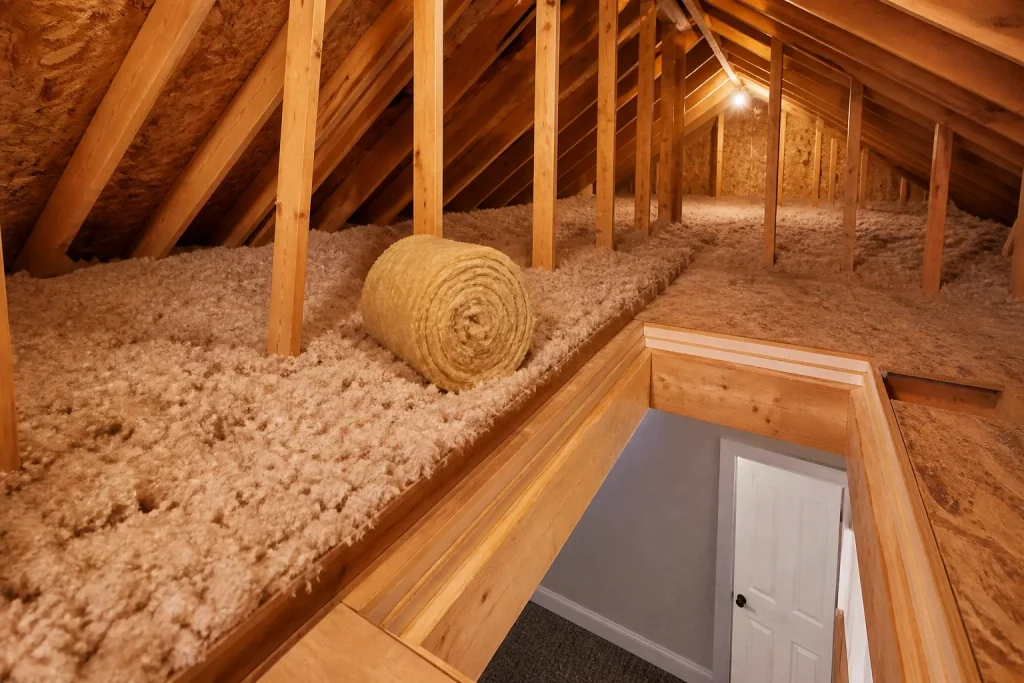
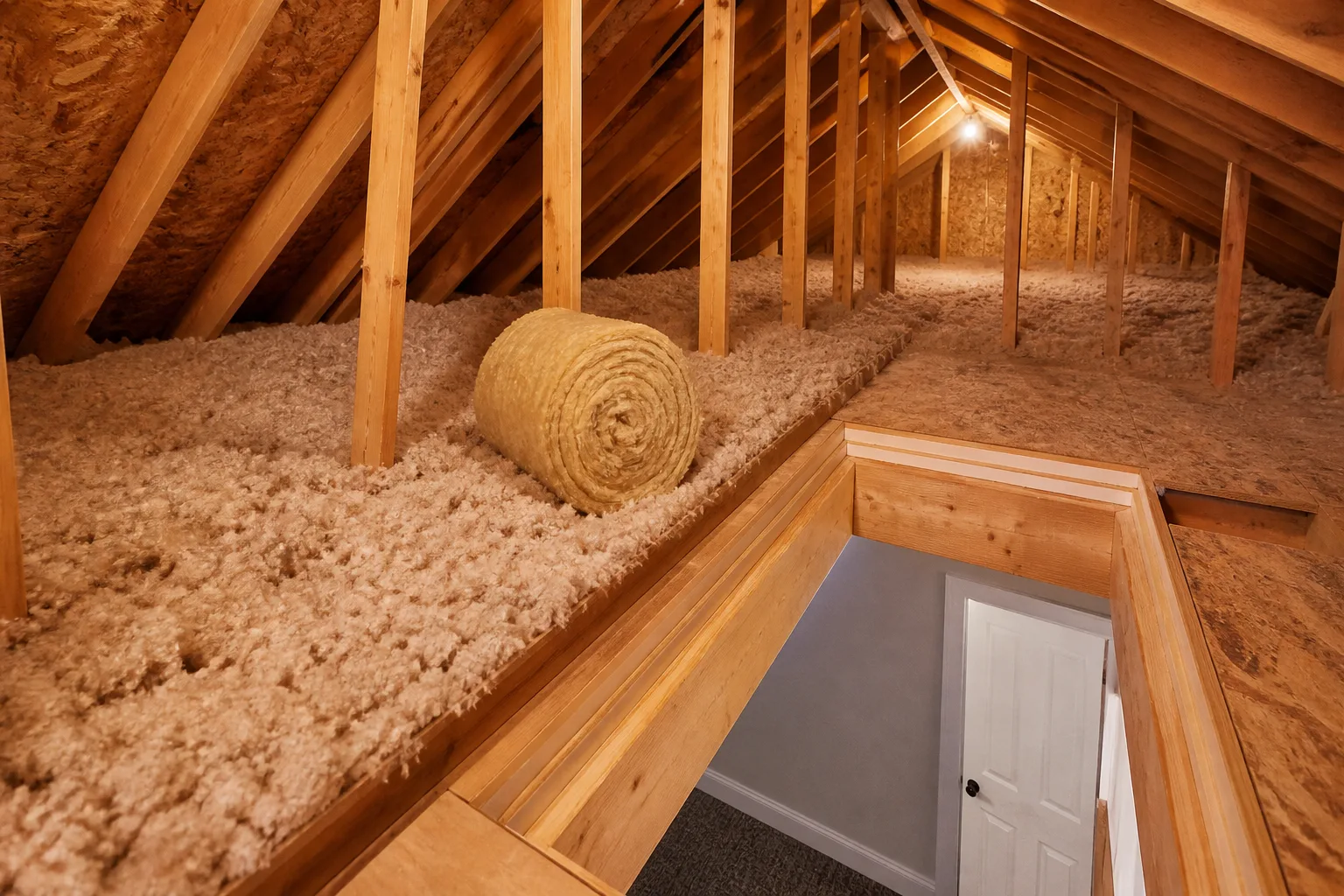
- Compressed or flattened blown-in (loose fibers blown into the attic cavity to fill every gap): If it looks like a packed snowdrift that’s been stepped on, it’s lost its loft. Common after a roof leak or a technician walking the joists.
- Dark staining on drywall below the attic: Often a roof or plumbing leak, not insulation. Address the water source before the insulation.
- Small dark pellets or a greasy smear: Rodent or pest activity. Insulation contaminated by droppings usually needs full removal, not spot treatment.
- Frost or ice on HVAC lines or the air handler in the attic: This is a refrigerant or airflow problem. The insulation around it may be fine. Don’t replace anything until the HVAC is diagnosed.
If you find genuine wet insulation in Enterprise after a monsoon-season leak, get a specialist out the same day. Wet insulation against drywall is where mold starts.
Why Calling a General Contractor First Usually Costs You More
When water is coming through the ceiling, the instinct is to call the first contractor who picks up. In an emergency, that instinct is expensive. A general contractor will typically assess the damage, recommend an insulation sub, and add a markup for the coordination. You pay for the phone call, the site visit, and the project management on top of the actual insulation work.
For sudden attic insulation failure, call a specialist first. Specifically:
- If water is actively entering: Call a roofer or a plumber to stop the source. Insulation can wait an hour. Water can’t.
- If the source is stopped and insulation is saturated: Call an insulation specialist. They’ll remove the wet material, dry the cavity, and quote the replacement.
- If the problem is pest contamination: Call insulation, not pest control first. You need both, but the insulation company will tell you whether removal is required before treatment.
In Enterprise, roof leaks tend to concentrate around the same few failure points: flashing at the chimney, valleys where two roof planes meet, and the seal around swamp cooler penetrations if one is still installed. If you know which one leaked, tell the specialist on the phone. It saves a diagnostic visit.
For non-emergency coverage assessment, see our Attic Insulation in Enterprise service page.
The Three Questions to Ask Any Emergency Insulation Company
Before you give anyone your address, ask these three questions. The answers separate a real emergency response from a sales visit.
1. “Can you give me a written price before you start?”
This matters more in an emergency than on a planned job. When you’re stressed and water is dripping, the pressure to say “just start” is highest. A written price before work begins protects you. If a company won’t put a number in writing before touching your attic, that’s your answer.
2. “Who is coming to my door, and can I have their name and photo in advance?”
This is the question most homeowners don’t think to ask, and it’s the one that matters most if you’re home alone, have young kids, or are managing the situation for an older parent. A legitimate operation will send you the technician’s name and photo before the visit. That’s how we run every job at Aspen Attic Insulation Enterprise, because a stranger at the door in an emergency is exactly when trust needs to be verifiable.
3. “What’s your guarantee, and how long does it last?”
Ask for it in writing. Ours is the 365-Day Done Right Promise: if the work fails within a year, we come back and make it right, and there’s a free second visit if the repair fails. Get the guarantee in writing before the first staple goes in.
If you’re weighing material options for the replacement, our Blown In Insulation in Enterprise page covers what works best for different attic configurations.
What Your Nevada Homeowner’s Insurance Will Cover, and How to Document It in the First Hour
Nevada homeowners policies generally cover sudden, accidental damage from a covered peril, like a burst pipe or a wind-damaged roof. They typically exclude damage from lack of maintenance, gradual leaks, pest infestation, and normal wear. That distinction matters most in the first hour, because the documentation you take now determines what gets approved later.
Do this immediately, before any cleanup:
- Photograph the water source and every stained surface, wide shots and close-ups.
- Video a slow walk through the attic if it’s safe. Narration helps adjusters.
- Photograph any damaged personal property before moving it.
- Save the roofer’s or plumber’s invoice for the source repair. That’s often what unlocks the insulation claim.
- Don’t throw away damaged insulation until the adjuster has seen it and documented it. Bag it if you must move it.
Pest-contaminated insulation is usually not covered in Enterprise. Neither is insulation that deteriorated slowly from a small leak you didn’t address. If you’re not sure where you stand, call your insurer before authorizing removal. Good insulation companies will pause for that call.
Why a Written Same-Day Price Matters More in an Emergency
A written price is good on a planned job. In an emergency, it’s the thing that protects you from every bad decision you’d otherwise make under pressure. Homeowners under stress authorize work they wouldn’t approve any other day. A written price slams the brakes on that.
Here’s what a real written estimate on emergency attic insulation in Enterprise should itemize: removal of the failed material, disposal, any air sealing before the new insulation goes in, and the cost of the new installation by product type. It should tell you the R-value you’re getting and the brands being used. We work with Owens Corning and GreenFiber on most attic jobs, matched to the specific need rather than whatever’s on hand.
You should also see a real range before you call. For an emergency removal and reinstall on a typical Enterprise attic, most homeowners are looking at $1,800 to $4,200 depending on square footage, material, and whether air sealing is included. A written price should land inside a range close to that. If it doesn’t, ask why.
When the job moves fast, the pressure to skip the paperwork is highest. That’s exactly when you should insist on it.
When to Call a Pro
Call a professional if you see wet insulation, smell a musty odor in the attic, find pest droppings, or you’re not sure what you’re looking at. Attics carry electrical junctions, HVAC lines, and roof structure. Walking joists in the dark to inspect isn’t a job to take on alone, and we’ve seen homeowners go through a ceiling trying. Call (844) 761-9996 for same-day availability in Enterprise.
For full material comparisons or heavier air-sealing needs on a compromised attic, our Spray Foam Insulation in Enterprise page explains when foam outperforms blown-in.
The Bottom Line
The 48-hour clock on an attic insulation emergency starts the moment the water hits. Stop the source, document everything, confirm what actually failed, and get a written price before anyone starts work. Skip the general contractor and call the insulation specialist first. That sequence saves money, limits damage, and keeps the stranger-at-the-door question off the table during an already stressful day.
If you’re in Enterprise and need help, Aspen Attic Insulation Enterprise offers free estimates. Call (844) 761-9996 and a live person will pick up. You can also start at the Aspen Attic Insulation Enterprise home page to see how we work.
Frequently Asked Questions
Blown-in fiberglass can lose 60 – 80% of its R-value within 24 hours of saturation, even if it looks dry two days later. Water collapses the fiber structure, and it doesn’t recover. Wet insulation must be removed and replaced, not dried out in place.
No. Wet insulation against drywall and framing is where mold starts, usually within 48 to 72 hours. Removing the wet material and drying the cavity is the only reliable fix. In Enterprise’s dry climate, attics can still trap moisture for days after a leak.
It usually covers sudden, accidental damage from a covered peril like a burst pipe or wind-damaged roof. It typically excludes pest damage, gradual leaks, and maintenance issues. Document everything in the first hour and call your insurer before authorizing removal.
A good emergency insulation company will, and should. Call and ask directly. If they can’t commit to a same-day or next-morning visit, call the next one on your list. At Aspen Attic Insulation Enterprise, a live person answers the phone around the clock, and you’ll get the technician’s name and photo before the visit.
Written by the team at Aspen Attic Insulation Enterprise.
Need Insulation Help?
Call Aspen Attic Insulation Enterprise - licensed & insured, here with fast after-hours help in Enterprise.
(844) 761-9996