
Trusted Attic Insulation for Enterprise Homeowners
If your upstairs rooms run 8 to 12 degrees hotter than the rest of the house from May through September, the attic above them is usually the reason. Enterprise sits in the Mojave’s high-desert band, where attic decking can hit 150°F on an August afternoon, and fiberglass batts that were adequate when your home was built in the 1990s or early 2000s have likely settled, sagged, or been crushed by years of HVAC work. Our technicians have up to 24 years of experience and can tell you within a 20-minute attic walk-through whether you’re losing cool air through the ceiling plane. We quote a written price before any work starts, and we can often get to an Enterprise address the same day you call. Reach us at (844) 761-9996.
Insulation Contractors
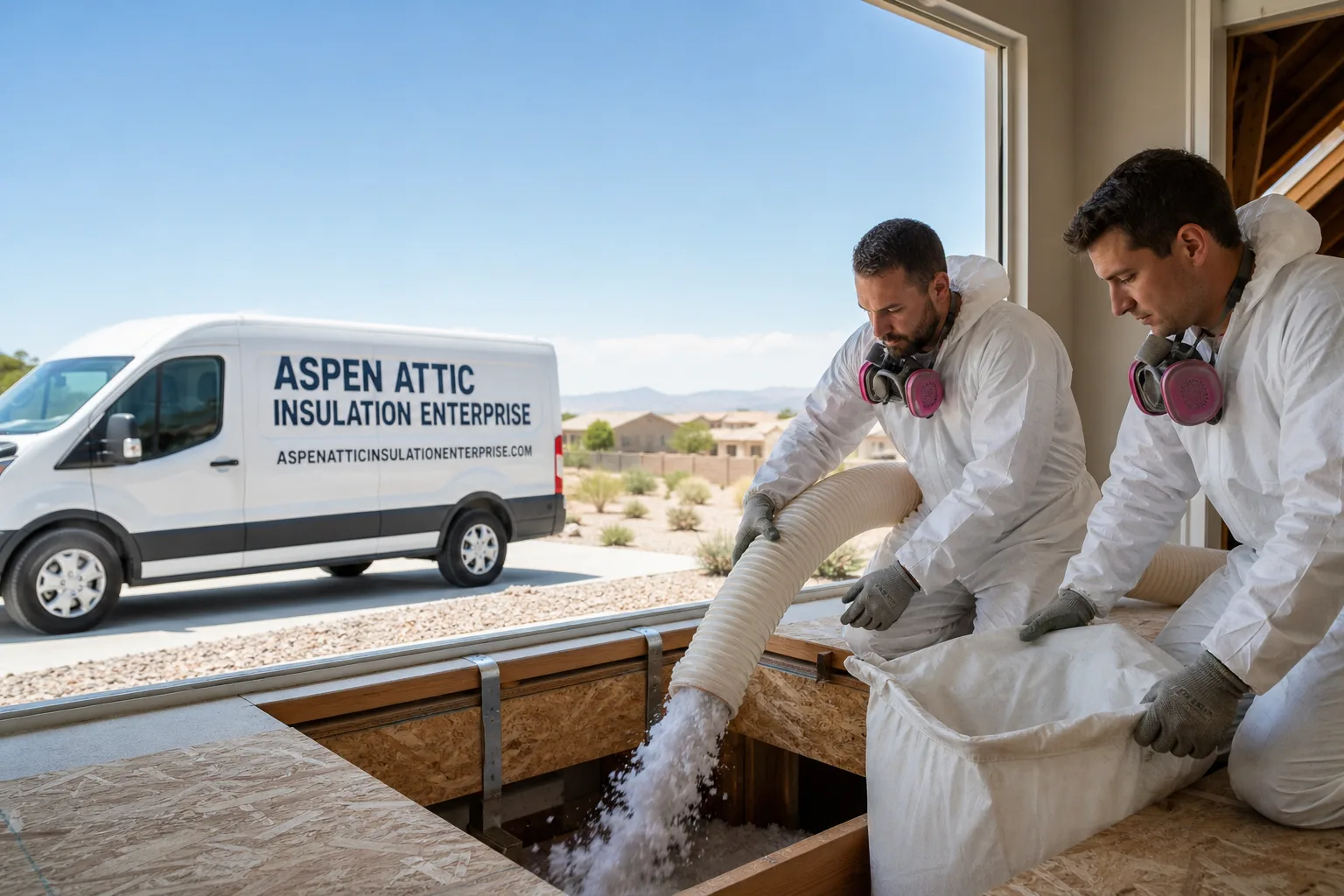
Insulation Contractors are the people who measure what your attic actually has, compare it to what the U.S. Department of Energy recommends for our climate zone, and install the right material to close the gap. You need one when your energy bill climbs faster than your usage, when rooms above the garage stay cold in January, or when you’re selling a home and the inspector flags thin attic coverage. Aspen Attic Insulation Enterprise handles the whole job: a blower-door-guided assessment, a square-footage measurement, and installation of Rockwool or CertainTeed products matched to your cavity depth. Typical attic insulation jobs in Enterprise run $1,600 to $4,200 depending on square footage and whether removal is needed. Every technician arrives background-checked, in a marked uniform, with a photo ID badge, and we send their name and photo before the visit.
What a Blower-Door Test Reveals
A blower-door test pressurizes the house and measures how much air escapes per minute. In Enterprise homes, the leak points are almost always the same: recessed can lights, the attic hatch, and top plates where the drywall meets the wall framing. Sealing those before we add insulation is what separates a real performance gain from a number on a sales sheet.
Choosing Between Loose-Fill and Batt
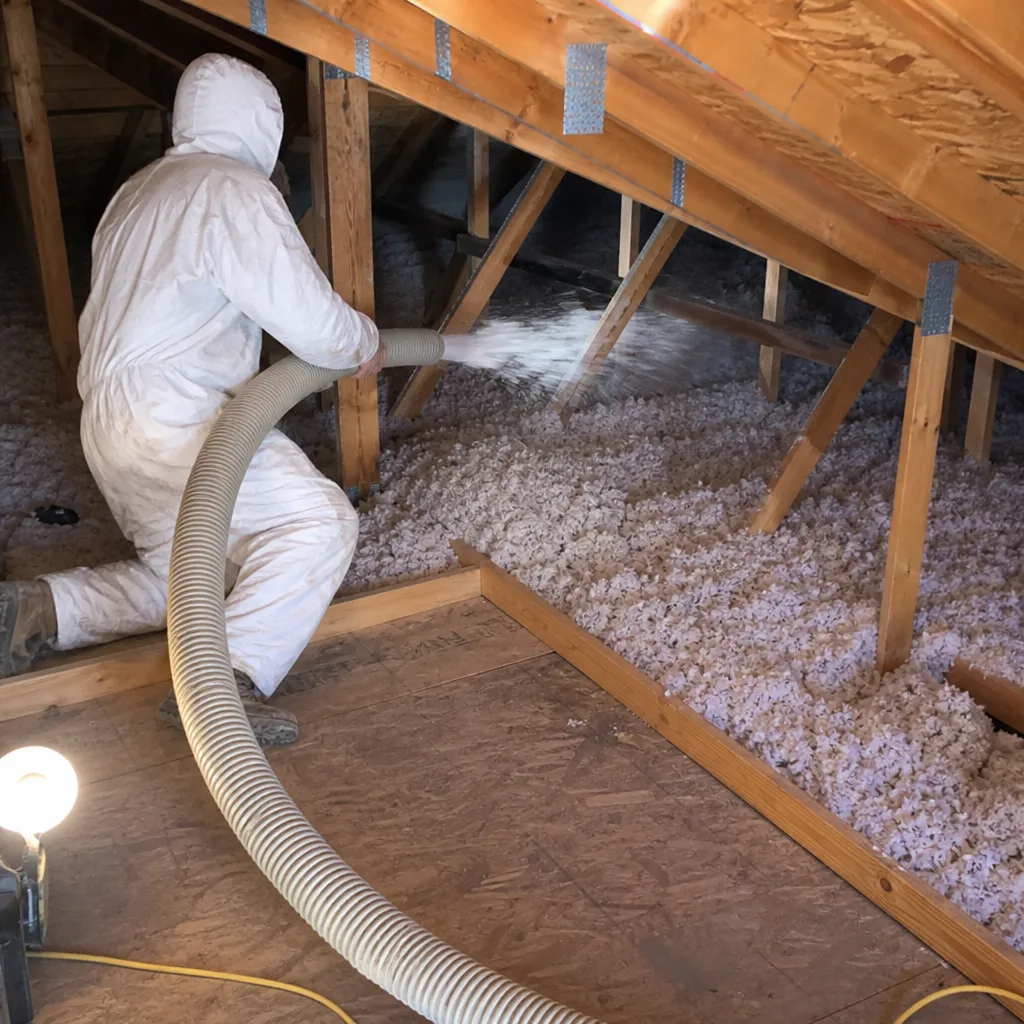
Loose-fill (blown-in) fibers fill around obstructions like ducts and cable runs, which matters in a retrofit. Batts work better on clean, open, regular joist bays. We’ll tell you which one your attic actually calls for, not which one is easier to sell.
Attic Ventilation
Attic Ventilation is the system that lets superheated air and trapped moisture escape before they cook your shingles from underneath or condense on the roof deck. You need it rebalanced when your attic reads above 130°F on a mild day, when you see rust on the nail tips poking through the sheathing, or when the previous owner added insulation without checking whether the soffit baffles were still clear. We inspect intake at the eaves and exhaust at the ridge or gable, then correct the balance. Most ventilation corrections in Enterprise run $450 to $1,400 depending on whether we’re adding ridge vent, replacing blocked baffles, or installing a solar-powered exhaust fan. Insulation and ventilation have to be planned together, which is exactly why we do both on one visit.
Why Soffit Baffles Get Blocked
When someone blows insulation carelessly, it drifts into the eave bays and chokes the intake. Without intake air, a ridge vent has nothing to pull, and the attic stalls. Installing rigid baffles before we add material keeps that airway open for the life of the insulation.
The Balance Rule
Exhaust capacity should roughly match intake capacity. A ridge vent added to an attic with no working soffit vent simply doesn’t perform. We measure both sides before recommending anything.
Radiant Barrier
Radiant Barrier is a reflective foil surface that bounces radiant heat off the underside of your roof before it can warm the attic air and radiate down through your ceiling. You need it when your attic stays hot even after insulation upgrades, or when you want to cut the heat load on a home with ductwork running through the attic. We install foil facing across the roof rafters, keeping clearance at the deck so the material can do its job. Radiant barrier jobs in Enterprise generally run $1,100 to $2,800 for a typical single-family attic. One honest caveat: radiant barrier won’t fix missing insulation. On most Enterprise homes we install both, and the combined result is what homeowners actually feel upstairs.
Perforated vs. Solid Foil
Perforated foil lets moisture pass through, which matters on roofs with asphalt shingles in our climate swing. Solid foil belongs only where moisture testing shows it’s safe. We test first.
Ductwork in the Hot Zone
If your ducts run through the attic, radiant barrier often delivers as much savings as the insulation itself. The ducts pick up attic heat before air ever reaches a register. We check duct runs on every attic assessment.
Attic Cleaning Services
Attic Cleaning Services cover the removal of dust, debris, pest droppings, and construction leftovers that build up in an attic over decades. You need this when you smell something musty upstairs, when you find rodent droppings near the hatch, or before any new insulation goes down over a soiled surface (new material over contaminated decking just traps the problem). Our team uses HEPA vacuums and bagged disposal, sanitizes the decking where needed, and hauls everything out without dragging debris through your living space. Cleaning in Enterprise typically runs $600 to $1,900 depending on square footage and contamination level. If a past remodeler left lumber scraps or old duct insulation up there, we clear it so your next layer goes onto a clean surface.
The Musty Smell Test
If your upstairs hallway smells like a damp basement on a dry 100°F day, the source is usually organic material in the attic. A cleaning visit identifies what’s decaying before it spreads to the framing.
Droppings and Safe Handling
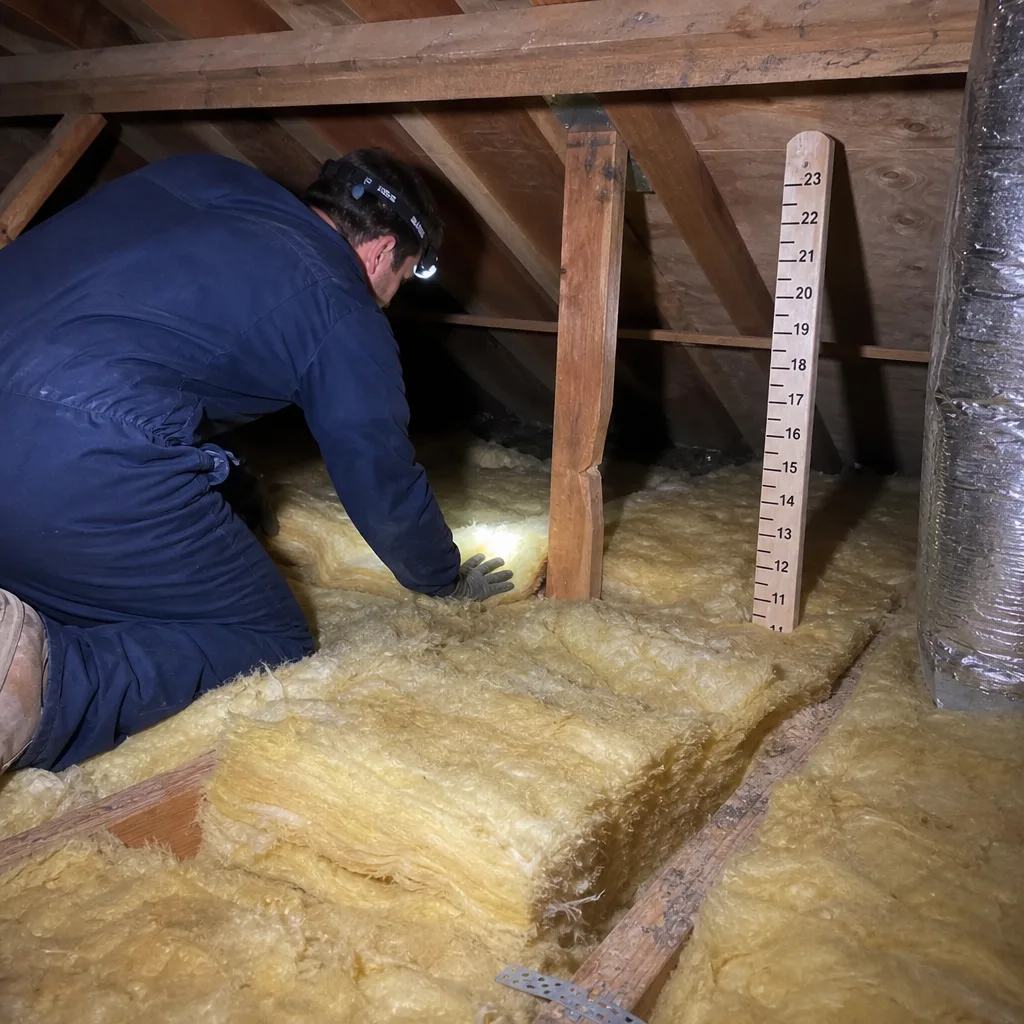
Rodent waste carries real health risk and belongs to trained handlers with proper respirators and containment. We remove it safely and identify where the animals got in so it doesn’t return.
Attic Mold Removal
Attic Mold Removal addresses fungal growth that forms on roof sheathing and framing when warm, moist air meets a cool surface and can’t escape. You need it when you see dark streaking on the plywood, when your HVAC tech mentions mold near the air handler, or when a home inspection report calls out microbial growth. Mold in an attic almost always traces back to a ventilation or air-sealing problem, so we treat the cause before the symptom: we sample the affected area, remediate the growth, and correct the moisture path with proper ventilation and air sealing. Attic mold remediation in Enterprise generally runs $900 to $3,200 depending on how much sheathing is affected. Fixing the mold without fixing the airflow is a repair that repeats every monsoon season.
Where Moisture Comes From
Bathroom fans venting into the attic, clothes dryer terminations that never made it through the roof, and gaps around recessed fixtures are the usual suspects. We trace each one before remediation begins.
Testing Before and After
Surface sampling goes out before any work and comes back after, so you have documentation for insurance, resale, or your own records. The paperwork belongs to you.
Attic Insulation Removal
Attic Insulation Removal is the process of extracting old, damaged insulation before installing new material. You need it when the existing insulation has absorbed moisture after a roof leak, when it’s been contaminated by pests, or when it’s been compressed to the point it no longer insulates. Our crews vacuum out the old material into sealed bags, examine the decking for rot or water staining, and dispose of everything to code. Removal in Enterprise typically runs $1,200 to $2,900 depending on the square footage and material type; older vermiculite or dense cellulosic material may cost more because of handling requirements. If you’re unsure whether you need full removal or just additional depth, we’ll show you. That’s also why we offer a written price before the first bag leaves the attic.
When to Replace vs. Top Off
Insulation that’s dry and clean can usually be topped off with more material. Insulation that’s wet, matted, or soiled has to come out. A moisture reader takes the guesswork out of that call.
What the Decking Reveals
Once the old material is out, you can see what’s been hiding: cracked rafter, old water stains, dissolved kraft facing. We document what we find with photos for your records.
Brands We Service
We work with Rockwool mineral wool, a dense material that holds its shape around irregular framing and resists moisture in ways fiberglass doesn’t. We know where it performs best and where it’s wasted money. CertainTeed fiberglass is the workhorse of our attic work, and we’ve installed enough of it to know how it behaves in the extreme high-desert swing between a 40°F January night and a 105°F July afternoon.
We also install Icynene and Demilec spray foam for homes that need a true air-seal, particularly where ductwork and plumbing penetrations punch through the ceiling plane. Whether you have old Johns Manville batts that need supplementing, Owens Corning from twenty years ago, or nothing at all, we can help. Every material we choose comes from one of the eight brands we work with, matched to your specific attic, not pulled from a single supplier’s catalog.
Signs You Need a Pro Right Now
- Rooms above the garage won’t cool. When one upstairs room runs 10 degrees hotter than the rest, the insulation in a specific bay or the duct feeding it is the usual cause. You don’t have to live with it for another summer.
- Your energy bill jumped without a rate change. A 20% bill swing on the same usage pattern usually means the attic system has degraded. A routine inspection pinpoints it.
- You can see the joists from the hatch. If the wood framing is visible from the opening, you’re almost certainly below the recommended R-value for Enterprise’s climate zone. Additional depth is one of the cheapest fixes in home performance.
- There’s a musty smell upstairs that won’t leave. A persistent damp smell in an attic or upper hallway points to a moisture problem that gets worse with each monsoon season. It needs a diagnosis, not an air freshener.
- You found droppings or chewed insulation. Rats and roof rats in the desert Southwest nest in attics and soil the material. The cleanup and the entry-point sealing need to happen together.
Our Process, Step by Step
- 1
Phone intake with a live person. A real person answers 24/7, takes your address, and schedules a window. No voicemail loops. You’ll receive the technician’s name and photo before the visit; if anyone else shows up, the visit is free.
- 2
Attic assessment and measurement. We climb in, measure the depth of existing insulation with a ruler and record the square footage, inspect baffles and ventilation, and use a moisture meter on any stained areas. This takes about 20 to 30 minutes.
- 3
Written price before any work. We hand you a written price covering labor and materials. Not an estimate, a fixed price. No post-job surprises, and no pressure to sign on the spot.
- 4
Installation day. Crews seal air bypasses first, install baffles, then add the material matched to your cavity design. We protect your floors and walk off with everything we brought.
- 5
Final walk-through and the 365-Day Done Right Promise. We verify the material depth, photograph the finished attic for your records, and back the whole job with our written guarantee for 365 days. If something fails, we come back once at no charge.
How Much Does Attic Insulation Cost in Enterprise?
A typical blown-in attic insulation job in Enterprise runs $1,600 to $4,200 for a 1,500 to 2,500 square foot attic, depending on whether removal is needed and how much ventilation correction is involved. Spray foam for a knee-wall or cathedral ceiling section typically runs $2,800 to $6,500 for the same home because the material and labor cost more. Radiant barrier runs $1,100 to $2,800, and attic cleaning or mold remediation sits at $600 to $3,200 depending on scope. Full removal and replacement often lands between $2,400 and $5,600 when the old material has to be hauled out.
What affects the price most: square footage, existing depth, whether the job requires removal, and whether the attic has ventilation issues that need correcting before new material goes in. Avoid overpaying by asking for a line-item written price instead of a single lump number, and by asking whether the price includes air sealing. Bulk-discount “free inspection” offers that turn into same-day contracts are usually priced higher than a clean comparison.
A free estimate from us includes a full attic walk-through, a written square-footage measurement, a material recommendation with R-value target, and a written price before any work begins. No deposit, no obligation, no post-visit surprises.
Our Service Area Near Enterprise
We serve Enterprise and the surrounding valley: Spring Valley, Paradise, Summerlin, Winchester, Henderson, Whitney, Sunrise Manor, Las Vegas, North Las Vegas, Boulder City, and Sandy Valley. Typical response times run 24 to 48 hours for a scheduled estimate and same-day for urgent issues. Our main service page is attic insulation in Enterprise, and if you’re further south, attic insulation in Spring Valley and attic insulation in Paradise both get the same crew standards and the same written guarantee. Check the home page for a full overview of how we work.
Serving Enterprise, NV – Our Local Coverage Area
We serve Enterprise and nearby communities. Use the map below to see the area we cover. If you’re nearby, we can almost certainly help.
Frequently Asked Questions About Attic Insulation in Enterprise
Attic insulation is the material layer between your living space and the roof that slows heat transfer in both directions. In Enterprise, it keeps summer heat out of the house and winter heat from escaping through the ceiling. Fiberglass, mineral wool, cellulose, and spray foam are the four material families we install, and each fits different cavity designs and budgets.
Most single-family attic insulation jobs in Enterprise finish in a single day, usually four to six hours for blown-in plus air sealing. Jobs that include full removal and ventilation correction can run into a second day. We’ll tell you the expected timeline in the written price before work begins.
Most Enterprise homeowners spend between $1,600 and $4,200 for a standard blown-in job, with removal and spray foam applications pricing higher. The number moves with square footage, current depth, and whether ventilation correction is involved. Call (844) 761-9996 for an exact written price; estimates are free.
Yes. Those are two of the eight brands we install, alongside Owens Corning, Johns Manville, Knauf, Icynene, Demilec, and GreenFiber. We match the brand to your attic rather than forcing one product onto every job. If you already have existing Rockwool or CertainTeed material in good condition, we can often supplement it rather than replace it.
Yes, we answer the phone with a live person 24/7, and we schedule urgent visits the same day when possible. Storm damage, sudden moisture intrusion, or a failed HVAC install that left the ceiling plane exposed all qualify as urgent. Call (844) 761-9996 and we’ll route the nearest available technician.
Every job carries our 365-Day Done Right Promise, a written guarantee covering labor and materials for a full year. If the work fails within 365 days, we come back once at no charge to make it right. The guarantee is printed on the same document as your price, so there’s nothing to hunt for later.
Clear the path to your attic access hatch, move anything fragile out of the hallway, and let us know in advance about pets. You don’t need to move furniture, cover items, or do anything else. Your technician arrives in a marked uniform with a photo ID badge, and their name and photo are sent before the visit.
Schedule Your Attic Insulation Service in Enterprise Today
Whether your upstairs is running hot, your bill has crept up, or an inspection report flagged your attic, we’re ready to take a look. Call (844) 761-9996 for a free, no-obligation estimate. You’ll get a written price before any work begins, a background-checked technician announced by name and photo, and 365 days of written coverage on the finished job. Live person answers 24/7.
Written by the team at Aspen Attic Insulation.