
Rockwool Attic Insulation in Enterprise: A Homeowner’s Guide
Rockwool doesn’t melt until it hits 2,150°F. The wood framing in your attic chars at 480°F. That gap is why fire departments recommend mineral wool in attached attic spaces, and it’s the single most underrated reason to choose Rockwool in Enterprise. Most homeowners shop attic insulation by R-value alone. Here, we’d argue fire performance deserves the first look. If you’d rather skip the research and talk it through, call (844) 761-9996 and we’ll walk you through it.
Why Fire Spread Is a Real Risk in Enterprise’s Slab Homes
Enterprise is built largely on single-story slab foundations, and that construction style has a specific fire behavior most people never think about. In a home without a basement, the garage shares a wall and often a ceiling cavity with the living space. A garage fire can move into the attic assembly in under four minutes, and once it’s in the attic, it runs the length of the house through the framing before anyone sees smoke.
That’s not a scare tactic. It’s the reason fire inspectors across the Mojave corridor push mineral wool for any attic over an attached garage. Rockwool carries a Class A fire rating, which means it won’t contribute fuel to a fire and won’t melt away to leave a path for flames. Fiberglass batts can slump and deform under intense heat. Blown cellulose is treated for fire resistance but is still an organic paper product.
What Rockwool does in that scenario is simple: it holds its shape and blocks the spread. In an Enterprise home where the attic sits directly over the bedrooms, that difference matters. If you want the full picture of how fire-rated materials fit into an overall attic strategy, see our Attic Insulation in Enterprise page.
Rockwool vs. Fiberglass vs. Blown Cellulose: An Honest R-Value Comparison
Enterprise sits in a hot climate zone, and the required ceiling insulation level for a home here is R-38. All three common materials can hit that target. What changes is how they do it, how long they last, and what they cost.
| Material | R-value per inch | Fire rating | Moisture behavior |
|---|---|---|---|
| Rockwool (RockFit batts) | ~4.0 | Class A, non-combustible | Hydrophobic, sheds water |
| Fiberglass batts | ~3.1 – 3.8 | Class A, but can deform under heat | Absorbs water if exposed |
| Blown cellulose | ~3.2 – 3.8 | Fire-retardant treated | Absorbs and holds moisture |
To reach R-38 in an Enterprise attic, you’re looking at roughly 10 inches of Rockwool, versus 11 to 12 inches of fiberglass or cellulose. The extra density is where Rockwool earns its keep. Blown-in insulation (loose fibers blown into the attic cavity to fill every gap) still wins on irregular or hard-to-reach spaces, and we use GreenFiber and Owens Corning products for those jobs. Rockwool works best as a fitted batt where the cavity is uniform.
Why Moisture Behavior Matters in a Desert Climate
Here’s the counterintuitive part: Rockwool’s water resistance matters in Enterprise even though the air is dry most of the year. Monsoon season runs from roughly July into September, and when it hits, the desert doesn’t get gentle rain. It gets sudden downpours that find every roof seam.
If a monsoon leak finds fiberglass or cellulose, the material soaks up water and holds it against the wood framing. That’s where mold and rot begin, and it happens fast in an attic that climbs past 150°F the next sunny day. Rockwool is hydrophobic, meaning it sheds water rather than absorbing it, and it dries out without losing its R-value.
We pulled a batt out of a garage over in the El Dorado neighborhood last month where a monsoon leak had been dripping for a season. The fiberglass had matted into a soggy blanket. The Rockwool next to it came out dry and intact. That’s a real-world demonstration you can’t get from a spec sheet.
What Installation in an Enterprise Attic Actually Looks Like
An Enterprise attic in July is not a comfortable place to work. Temperatures routinely climb past 150°F, and crew safety and scheduling matter as much as the material itself. Here’s what a proper install involves:
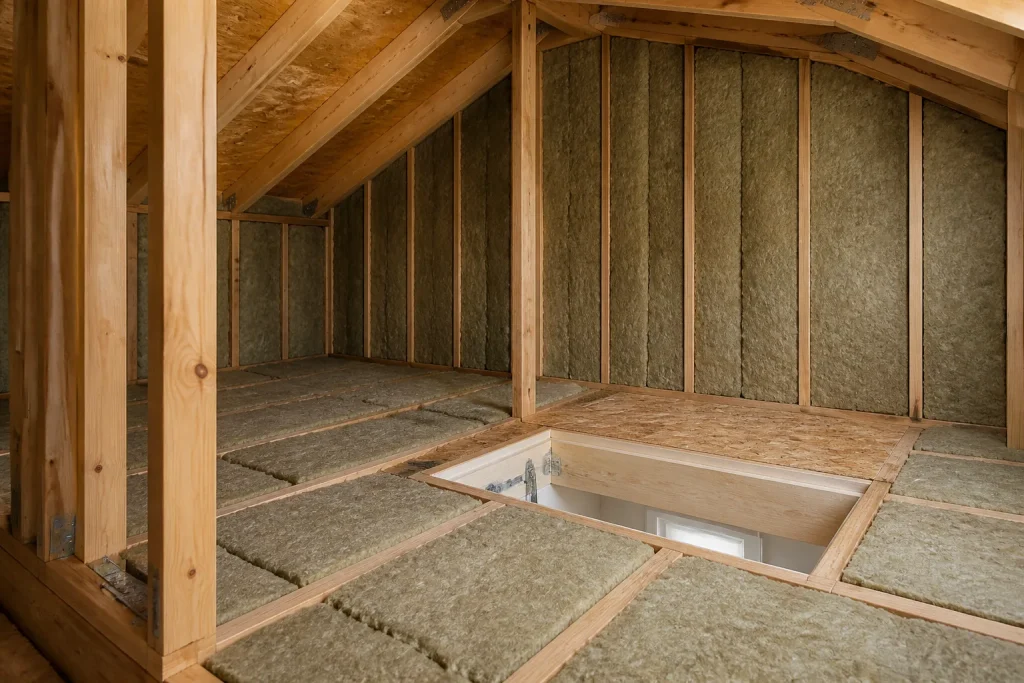
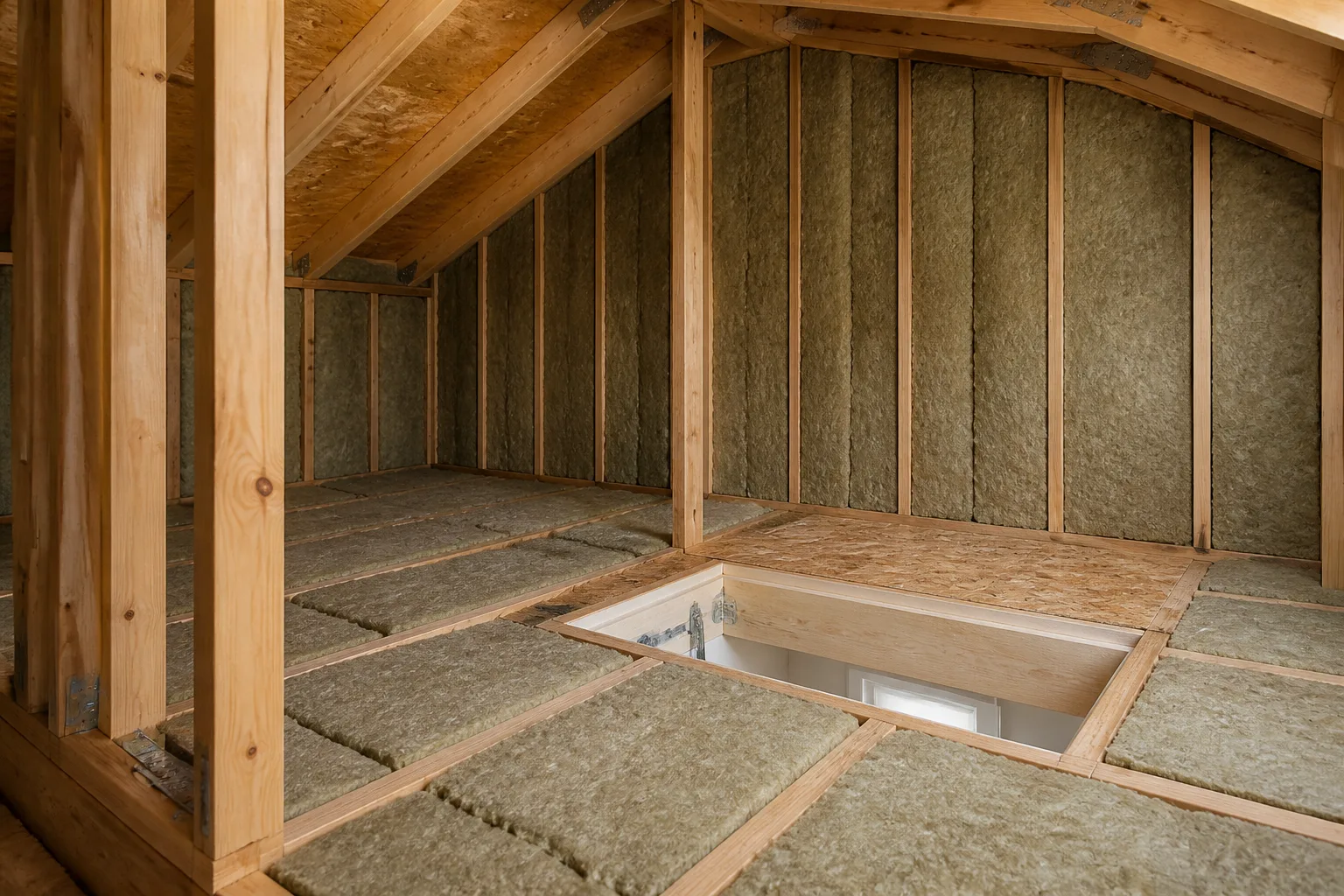
- Access hatch check. Your attic hatch needs to be large enough to fit batts without folding or crushing them. Crushed Rockwool loses R-value. If the hatch is undersized, we plan around it before quoting.
- Inspection before the quote. We check framing, existing insulation, ventilation, and any signs of past moisture before we give a number. Our technicians have up to 24 years of experience, and that pre-quote walkthrough is where most surprises get caught.
- Scheduling around summer heat. Early-morning starts are standard for Enterprise installs in June through August. Rockwool handles heat well, but the people installing it don’t work in an oven all afternoon.
- Fit and coverage. Batts get cut to fit each cavity, with no gaps at the eaves or around penetrations. Gaps are where heat leaks and where a fire finds an opening.
Every Aspen technician is background-checked, identity-verified, and sent to you by name and photo before the visit. If anyone else shows up, the visit is free.
Rockwool Pricing in Enterprise: What You’ll Actually Pay
Rockwool runs 20 to 30 percent more than fiberglass batts on an upfront basis. Installed attic insulation in Enterprise ZIP codes (89123, 89183, 89044) typically lands in these ranges:
- Rockwool batts at R-38: $3.50 – $5.00 per square foot installed
- Fiberglass batts at R-38: $2.25 – $3.25 per square foot installed
- Blown cellulose at R-38: $2.00 – $3.00 per square foot installed
- Attic prep, air sealing, and hatch rebuild (if needed): $400 – $1,200
On a 1,500-square-foot attic, that’s roughly $1,100 to $2,600 more for Rockwool than fiberglass upfront. The 10-year energy delta tells a different story: the higher effective R-value and better air sealing from fitted Rockwool batts typically cuts cooling costs by 15 to 20 percent in an Enterprise home, which often recovers the difference across a decade. The fire protection isn’t on the energy math at all, but it’s the reason many homeowners here choose Rockwool anyway.
Kinetic building codes have shifted over the past several years, and demand for Rockwool in Enterprise has pushed prices down from where they sat even two summers ago. It’s worth a fresh quote. Call (844) 761-9996 for a written estimate before any work begins – no post-job surprises.
When to Call a Pro
Attic insulation looks like a simple weekend project until you’re up there in 150°F heat, crawling across joists, and second-guessing whether the venting is right. We get calls every month from homeowners who tried it themselves and discovered a gap at the eaves, a crushed batt, or a moisture problem under the old material. If you’re not sure about your attic’s fire blocking, ventilation, or R-value, get a pro to look before you spend a day on a ladder.
Rockwool pairs well with blown-in in mixed attics, and spray foam handles rim joists and rim cavities better than either. See our Blown In Insulation in Enterprise and Spray Foam Insulation in Enterprise pages to compare.
The Bottom Line
In Enterprise, Rockwool attic insulation costs more than fiberglass or cellulose. It’s also the only material here that’s genuinely non-combustible, sheds monsoon water instead of holding it, and holds its R-value through years of desert heat. For a slab home where the attic sits over your bedrooms, we think that’s the trade worth making.
Every Aspen job comes with a written price before work begins and the 365-Day Done Right Promise, covering labor and materials in writing. If you’re in Enterprise and need help, Aspen Attic Insulation Enterprise offers free estimates – call (844) 761-9996.
Frequently Asked Questions
Rockwool attic insulation in Enterprise runs $3.50 to $5.00 per square foot installed at the required R-38 level, or roughly $1,000 to $2,200 more than fiberglass for a typical 1,500-square-foot attic. That includes batts, installation, and basic prep. Call (844) 761-9996 for an exact quote – estimates are free.
Rockwool won’t stop a fire on its own, but its Class A non-combustible rating means it doesn’t feed the fire or melt away to open a path. In an Enterprise slab home, that resistance is one of the strongest defenses a garage-to-attic fire has. A full fire block and code-compliant assembly are also required; call (844) 761-9996 to have your attic assessed.
For fire performance and moisture resistance, yes. Rockwool tolerates the desert heat without deforming the way fiberglass can, and it sheds monsoon water rather than holding it. Fiberglass wins on upfront cost. For your specific attic, call (844) 761-9996 for a comparison quote.
Yes, with early-morning scheduling. Attic temperatures here routinely exceed 150°F by mid-morning in July and August, so installs start early. Call (844) 761-9996 and we’ll get a technician out to inspect your attic and quote before the heat sets in.
Written by the team at Aspen Attic Insulation Enterprise.
If you’d like help deciding between Rockwool, fiberglass, and blown-in for your home, see our Spray Foam Insulation in Enterprise guide or start at the Aspen Attic Insulation Enterprise home page for a free estimate. Call (844) 761-9996 today.
Need Insulation Help?
Call Aspen Attic Insulation Enterprise - licensed & insured, here with fast after-hours help in Enterprise.
(844) 761-9996