
5 Mistakes to Avoid With Attic Insulation
The most expensive attic insulation mistake we see in Enterprise isn’t choosing the wrong R-value. It’s blocking the soffit vents with blown-in material, which quietly turns an insulation upgrade into a moisture and mold problem within about 18 months. The second most expensive mistake is hiring fast instead of hiring right. Before a single bag goes in, five decisions on paper determine whether you get a 15-year result or a callback you didn’t plan for. Here’s what to watch for, and if you’d rather not climb into a 140-degree attic yourself, call (844) 761-9996 and we’ll take a look.
Key Takeaways
- Blown-in insulation that buries the soffit vents traps moisture and can lead to mold within a year and a half.
- Your written contract should name the installed depth in inches and the R-value, not R-value alone.
- Air sealing comes before insulation. Skip it and you’ve insulated a colander.
- A warranty without a date, a signature, and specific callback triggers won’t hold up.
- Attic work around recessed lights, the hatch, and the HVAC platform rewards a specialist.
Mistake 1: Letting Blown-In Insulation Bury Your Soffit Vents
Soffit vents are the intake for your attic’s ventilation. They sit low along the eaves, and they’re exactly where blown-in insulation wants to pile up. When loose material covers them, fresh air stops moving through the attic. Heat and moisture build, decking stays damp, and in Enterprise’s summer cycle that trapped moisture can feed mold on the roof sheathing before you ever notice a problem upstairs.
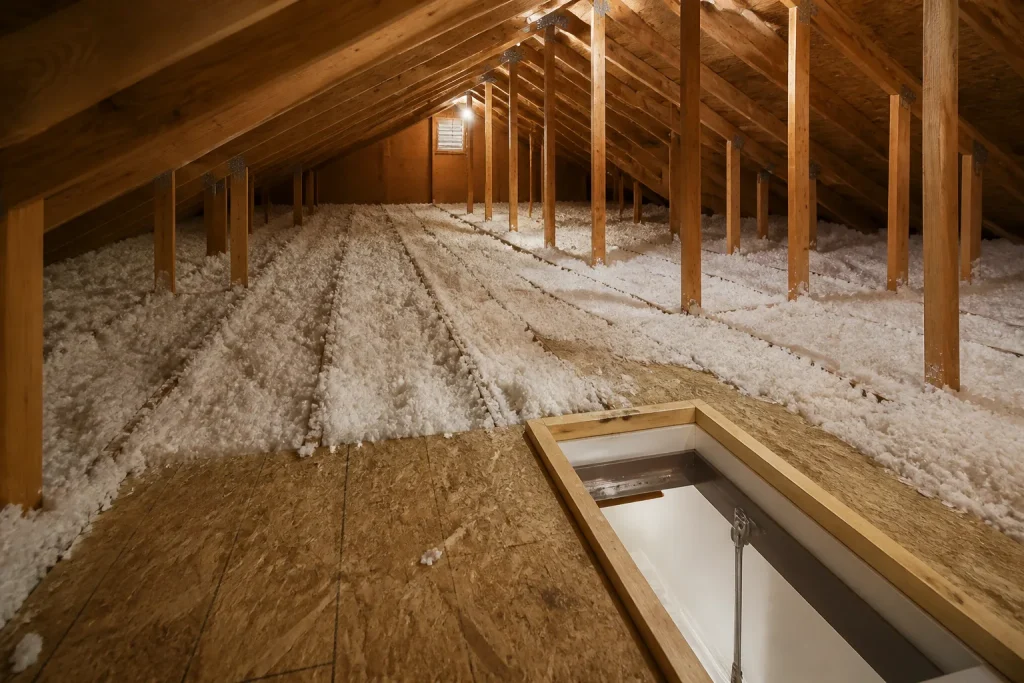
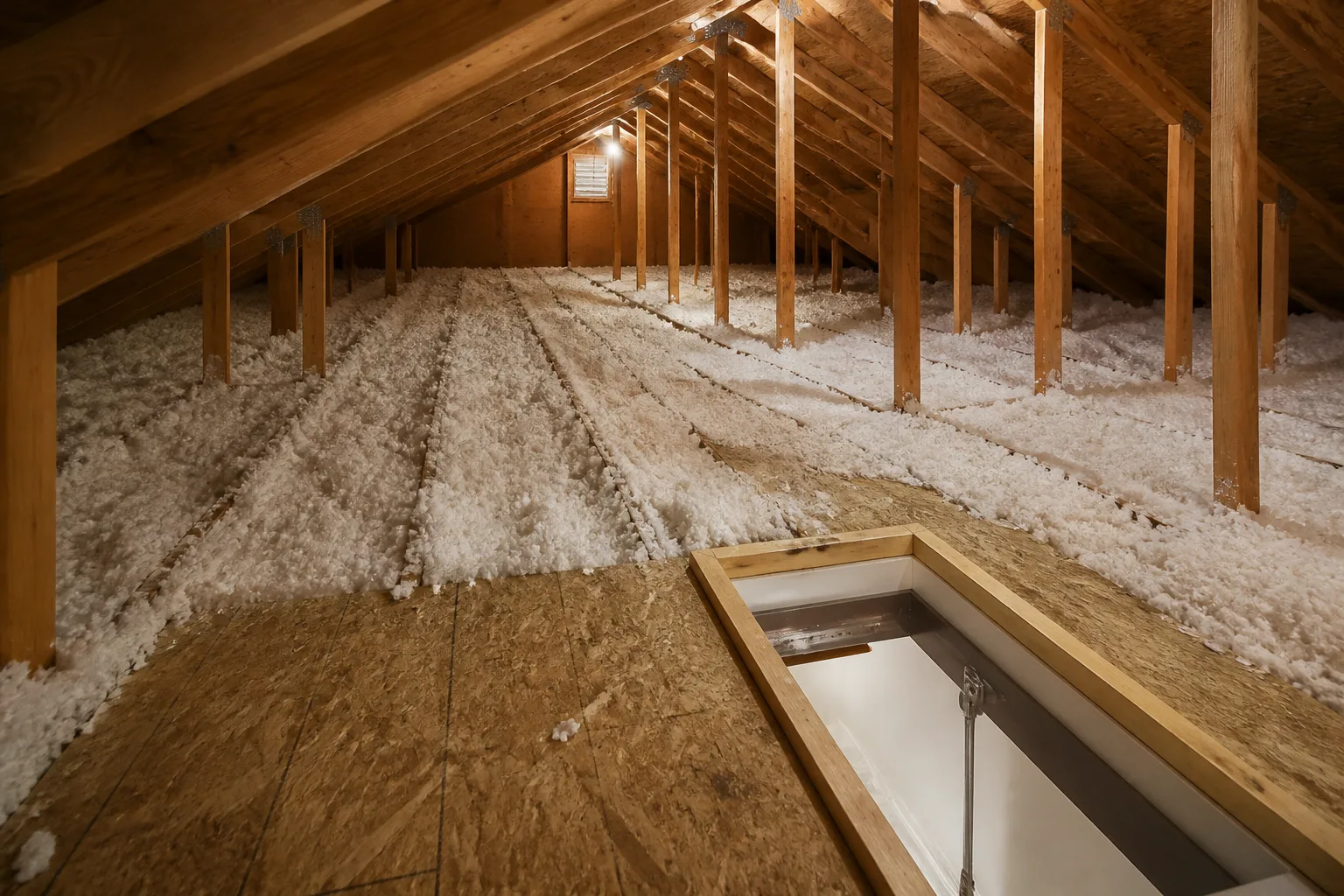
What it looks like: a white or pink drift of fiber pressed flat against the roof deck at the eaves, with no daylight showing between the rafters. On a proper job, you’ll see foam or plastic baffles holding a clear channel open at each vent bay. Installers rush past this step because baffles take time to staple in and they’re hidden once the insulation goes down. You can’t see them from the hatch.
How to confirm it before you sign off:
- Ask the installer to show you baffles at the eaves, and get “ventilation baffles installed at all soffit vents” written into the scope.
- After the job, walk the attic edge with a flashlight and check that you can see the vent openings, not insulation packed over them.
- If your home has a ridge vent, confirm the intake side stays clear; balanced ventilation needs both.
We’ve pulled insulation back on Enterprise homes where a previous installer buried every vent and the homeowner was chasing a musty smell for a year without knowing why. Baffles are cheap. Mold remediation isn’t.
Mistake 2: Accepting a Quote in R-Value Alone
R-value tells you how well a material resists heat flow. It does not tell you how deep the material will be installed in your attic. Those are two different numbers, and both need to be in your written contract. Why? Because the same R-value can be reached with different products at different depths, and a crew that only quotes R-value can under-fill the cavity and still claim they hit the spec.
Here’s the plain-language version: R-value is the target, installed depth in inches is the receipt. If a contract says “R-49” and nothing else, you have no way to verify the job was done. If it says “R-49 at approximately 14 inches of blown fiberglass, verified with a depth marker at three points,” you can check it.
What to insist on in writing:
- The R-value target and the installed depth in inches, side by side.
- The exact product name. A quality contractor will specify something like Johns Manville or Knauf so you know what’s going in your attic.
- Depth markers placed at several points, photographed after install, so you can confirm coverage.
In our experience, a quote that names only R-value is the one most likely to be adjusted on the day of the job. When the price is in writing before any work starts, that adjustment becomes the contractor’s problem, not yours. Our attic insulation in Enterprise estimates always list both numbers, because a homeowner who can read the spec is a homeowner who can hold the crew to it.
Mistake 3: Skipping Air Sealing Before You Add Insulation
Adding blown-in insulation over open top plates, wire penetrations, and gaps around the chimney chase is like insulating a colander. Warm air escapes through the holes no matter how thick the fiber gets. In Enterprise, where attics swing from cool nights to brutal summer afternoons, that air movement also carries moisture into the insulation, which cuts its performance and can leave it damp and settled.
Air sealing is the unglamorous step that makes everything after it work. It means foaming and caulking the penetrations before any insulation goes down: the tops of interior walls, wire and plumbing holes, the gap around a flue, and the recessed light housings that need sealing from below. It takes real time, which is why a rushed crew skips it.
How to check whether a quote includes it: look for the words “air sealing” in the scope, not just “insulation.” Ask which penetrations will be sealed. If the answer is vague, that’s a sign it’s being treated as an optional add-on rather than a required first step.
The order matters and it’s not negotiable: seal first, then insulate. Do it the other way and you’ll pay to blow in material that never reaches its rated performance.
Mistake 4: Hiring a Generalist Handyman for Attic Work
A handyman can hang a door and patch drywall, and many do solid work at fair prices. Attic insulation is a different skill set, and the gap shows up in specific places.
At the attic hatch: a specialist weather-strips and insulates the hatch cover so it doesn’t become a cold-air chimney. Around recessed lights: old-style cans need clearance or a sealed enclosure; a generalist who doesn’t know the difference can pack insulation against a non-IC-rated fixture and create a fire risk. At the HVAC platform: the air handler and duct connections need proper support and clearance, or the crew boxes them in and cuts airflow. And at the soffit vents, covered above, the specialist knows baffles are mandatory, not optional.
The reason this matters in Enterprise goes beyond heat. If a crew installs spray foam over a surface that isn’t ready, or blows in material over active moisture, the problem gets sealed in and you find out months later. A specialist who inspects first will flag it before it’s buried.
When to call a pro: if your attic has any recessed lights, an HVAC unit on the floor, a knee wall, or evidence of past water staining, that’s not a handyman job. That’s a job for someone who does this every day and knows what to seal and what to leave open. Our spray foam insulation in Enterprise and blown-in insulation in Enterprise crews are specialists in exactly this.
Mistake 5: Accepting a Verbal Warranty
“Oh, we stand behind our work” is not a warranty. A guarantee that isn’t dated, signed, and specific about what triggers a callback is functionally worthless when the first hot summer rolls around and your utility bill hasn’t moved. In Enterprise’s heat cycle, insulation gets tested fast, and a promise made over the phone has a way of growing fuzzy by August.
A real written guarantee should state:
- What’s covered, in plain terms: labor, materials, or both.
- How long it runs from the date of completion. Ours runs 365 days.
- What happens if it fails: a free second visit, not a service-call fee.
- A signature and a date, from the company, before work begins.
Ask to see the warranty language before you sign the estimate, not after the job is done. If a contractor can’t show you a written guarantee up front, treat that as a signal. The same applies to the price: if it isn’t in writing before anyone touches your attic, it isn’t a price, it’s a number someone said out loud.
Our 365-Day Done Right Promise is written and signed on every job, and if we get it wrong we come back for free. That’s the standard we hold everyone who sends a technician to your door to, right down to the name and photo of the tech we send.
Related services in Enterprise: if you’re still sorting out whether you need top-up or a full replacement, our blown-in insulation page walks through the options, and you can always start from the Aspen Attic Insulation Enterprise home.
The Bottom Line
The five mistakes all trace back to one thing: what’s in writing before the work starts. Blocked soffit vents, missing depth numbers, skipped air sealing, the wrong hands around recessed lights, and a warranty nobody signed all get caught by a careful contract and a specialist who inspects before blowing. Get the spec right and you’re set up for a 15-year result. Get it wrong and you’ll likely see a callback inside four years.
If you’re in Enterprise and need help, Aspen Attic Insulation Enterprise offers free estimates. Our technicians have up to 24 years of experience, every tech is background-checked, identity-verified, and sent to you by name and photo before the visit, and every job is covered by our 365-Day Done Right Promise in writing. Call (844) 761-9996 for a free estimate and a written price before any work starts.
Frequently Asked Questions
What’s the most common attic insulation mistake to avoid?
Letting blown-in insulation cover the soffit vents. When loose material blocks the intake vents at the eaves, attic ventilation stops, moisture builds, and mold can show up on the roof deck within about 18 months. Confirm ventilation baffles are installed and hold a clear channel at every vent bay before you sign off on the job.
Should I get R-value or depth in my contract?
Both. R-value alone doesn’t tell you how much material goes in. Insist on the R-value target plus the installed depth in inches, plus the product name, all in your written contract. That way you can verify the job was done to spec instead of taking a crew’s word for it. For a written price and estimate, call (844) 761-9996.
Do I need air sealing before adding insulation?
Yes, always. Air sealing the open top plates, wire penetrations, and recessed light housings comes first; insulation goes in after. Adding insulation over open gaps lets warm air escape regardless of how thick the fiber is, which is like insulating a colander. Ask any contractor to confirm air sealing is in the scope, not treated as an optional extra.
What should a written warranty include?
A written warranty should state what’s covered (labor, materials, or both), how long it runs from the completion date, and what happens if it fails, such as a free second visit rather than a service fee. It should be signed and dated by the company before work begins. A verbal “we stand behind our work” won’t help when you’re chasing a callback in Enterprise’s summer heat. Call (844) 761-9996 for a free estimate, and you’ll get the guarantee language in writing up front.
Written by the team at Aspen Attic Insulation Enterprise.
Need Insulation Help?
Call Aspen Attic Insulation Enterprise - licensed & insured, here with fast after-hours help in Enterprise.
(844) 761-9996