
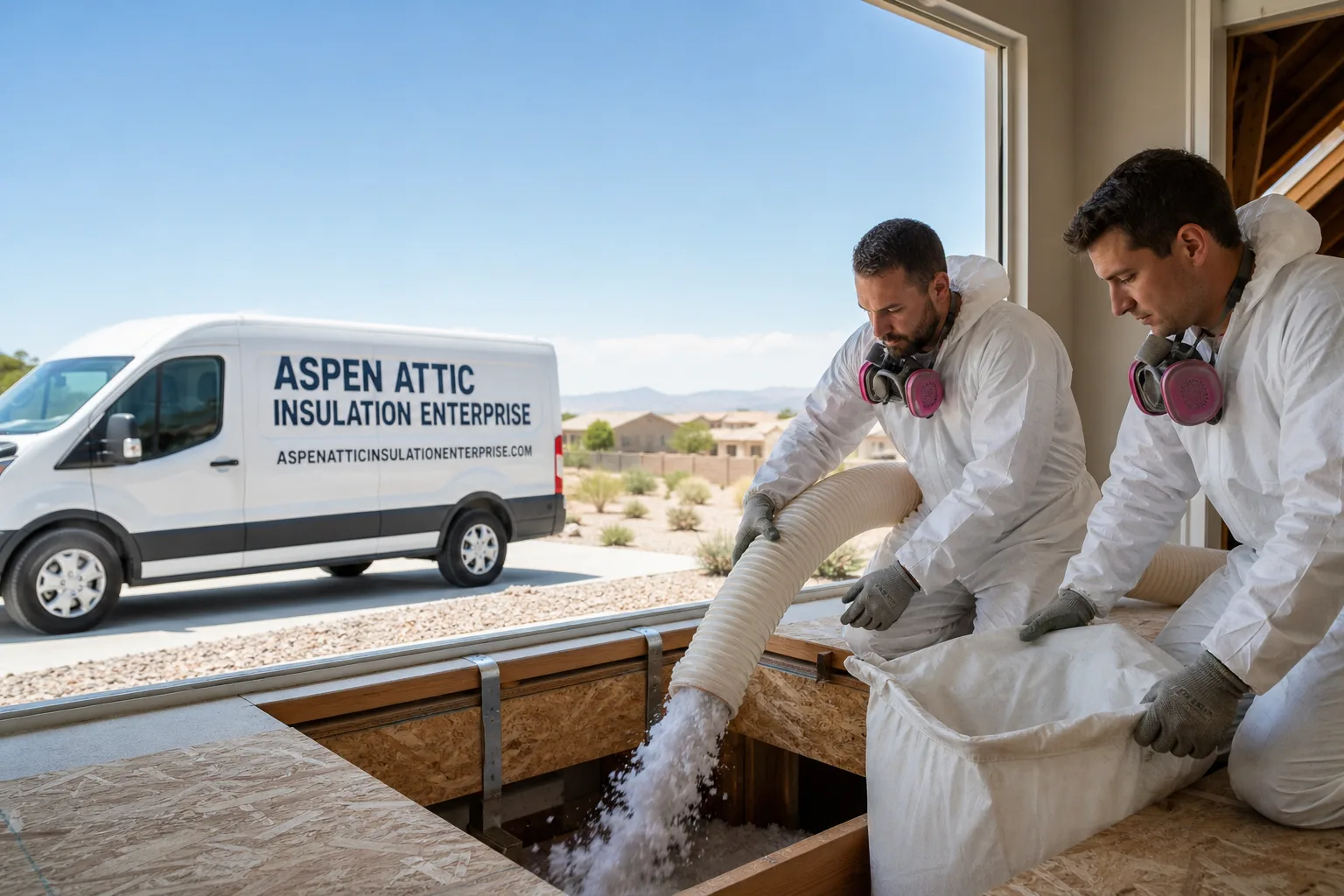
Blown-In Insulation Cost in Enterprise, NV: What You’ll Actually Pay
Blown-in insulation cost in Enterprise, NV runs about $1.60 to $3.20 per square foot in the attic, or roughly $1,900 to $4,400 for a typical 2,000 sq ft home brought up from R-8 to the R-38 target that Southern Nevada’s climate zone calls for. A bag of blown fiberglass covers 40 to 50 sq ft at R-38, and that math is honest. What a national calculator leaves out: if your Enterprise attic bakes at 150°F in July and the old insulation is a compacted crust, you’re not adding insulation, you’re layering over a problem. Call (844) 761-9996 for a free written estimate before you authorize anything.
Why the National Average Misses the Mark in Enterprise
Most cost guides quote a per-square-foot average built from attic square footage alone. That number assumes a clean starting point and a straightforward install. Enterprise attics rarely offer either. Three variables drive the real price here:
- Starting R-value. The original blown fiberglass in older tract homes around Enterprise has settled to R-8 or less. You pay to span the gap from R-8 to R-38, not from a theoretical R-30.
- The attic temperature environment. Summer highs average 104°F and regularly spike past 110°F, with heavy solar load on west- and south-facing roofs. The attic itself can top 150°F, which affects material choice and, sometimes, timing.
- Whether duct sealing comes first. Flex duct runs through that same oven. If connections are separating under the weight of compacted old insulation, blowing new material over the mess buries a leak you won’t see again for years.
Get the sequence wrong and every bag of new material is wasted money. We’ve seen it enough times to build the inspection into the quote.
What You’ll Pay: Per-Bag and Per-Square-Foot Ranges
Enterprise sits in IECC Zone 3B, so the attic target we work toward is R-38. Here’s what the numbers look like across the materials we use most, sourced from brands like Owens Corning, Knauf, and GreenFiber:
| Item | Cost range |
| Blown fiberglass (Owens Corning, Knauf) – per sq ft | $1.60 – $2.80 |
| Blown cellulose (GreenFiber) – per sq ft | $1.90 – $3.20 |
| Attic blow-in, 2,000 sq ft home, R-8 to R-38 | $1,900 – $4,400 |
| Duct inspection and sealing (when needed) | $280 – $650 |
| Air sealing around penetrations and top plates | $175 – $450 |
| Blown cellulose dense-pack in walls (stucco-frame retrofit) | $2.60 – $4.20 per sq ft |
A 2,000 sq ft Enterprise attic going from R-8 to R-38 typically takes somewhere in the range of 34 to 48 bags of blown fiberglass, depending on joist depth and how much old material we leave in place or rake out. Cellulose runs fewer bags for the same R-value because it packs denser, which is part of why it lands higher per square foot.
Our written quote locks the bag count and the labor before the blowing machine starts. Homeowners around Enterprise have been handed “extra bags” bills by other contractors after the fact. That doesn’t happen here. The price you sign is the price you pay.
Why Blown Cellulose Has an Edge in Enterprise’s Stucco-Frame Walls
Most of Enterprise’s housing went up during the 1990s to 2010 as two-story stucco-and-wood-frame tract homes with pitched roofs and unfinished attics. That construction type matters when we’re retrofitting walls rather than the attic. Blown cellulose (GreenFiber is our go-to) fills irregular cavities better than blown fiberglass because its fibers interlock and hold shape. In a stucco-frame wall with fire blocking, off-set studs, and the occasional surprise return, that difference shows up in the settled R-value you actually get. Fiberglass sifts and leaves voids. Cellulose doesn’t.
Attic blow-in is a different call. For a flat top-up over a wide open area, fiberglass is a fair choice and often the right cost point. If you want a closer look at how we scope the whole job, our page on Insulation Installation in Enterprise walks through the process.
The Step Other Quotes Skip: Duct Inspection Before We Blow
In Enterprise attics with heavy settling, we check the flex duct before we touch the insulation machine. Specifically, we look at whether the duct connections are separating under the weight of compacted old material and whether the runs are sweating. In an attic that hits 150°F alongside an AC system running flat out, degraded duct insulation and separated joints are common. Bury a disconnected duct under R-38 of new material and you’ve created an invisible loss that shows up as a higher summer bill you can’t explain.
When the ducts need attention, we seal them first, then blow. That sequence is why we ask about your last electric bill before we quote. It tells us almost as much as a walkthrough.
The 365-Day Done Right Promise and What It Covers
Every blown-in job we complete is covered by the 365-Day Done Right Promise, in writing, on labor and materials. If the blown-in material settles below the guaranteed R-value within a year, we add material at no charge. If any part of the work isn’t right, we come back. If a repair fails, the second visit is free.
The technicians who show up are background-checked, identity-verified, and sent to you by name and photo before the visit. They arrive in a clean marked uniform and show a photo ID badge at the door. If someone other than the technician you were told about arrives, the visit is free and we make it right. A live person answers the phone when you call, day or night. These are the Threshold Verified standards every Aspen Attic Insulation Enterprise job runs on, and they’re part of why we quote the way we do. Our technicians have up to 24 years of experience working attics in this climate.
FAQs
Plan on $1,450 to $3,300 for attic blow-in on a 1,500 sq ft Enterprise home going from R-8 to R-38, depending on material and whether ducts need sealing first. The attic square footage, not living space, is what drives the bag count, so a single-story home pays more per living square foot than a two-story. Call (844) 761-9996 for a free written quote on your exact attic.
In most Enterprise attics, a top-up is cheaper than a full removal, and it’s the honest answer more often than not. If the old material is settled crust but still sound, we blow over it after air sealing. When we find wet, contaminated, or pest-damaged insulation, removal is the only correct call and the quote reflects it. We tell you which one you’re looking at in writing before the work starts, with no surprises after.
Same-day estimates are often possible when you call (844) 761-9996, and a live person answers around the clock. Full blow-in jobs usually schedule within a few days of the estimate so we can match material to your attic and confirm the duct inspection. Give us a call and we’ll tell you exactly what the calendar looks like.
A 2,000 sq ft attic moving from R-8 to R-38 typically takes 34 to 48 bags of blown fiberglass, fewer if we use cellulose because it packs denser. The number gets locked into your written price before any work begins, so the bag count can’t creep up later. Call (844) 761-9996 and we’ll run the math for your home.
Get Your Written Price Before Any Work Begins
One call gets you a free estimate from a company that puts the technician’s name, face, and price in writing before anyone knocks. Estimates are free, the pricing is upfront, and the 365-Day Done Right Promise goes on every job. Call (844) 761-9996 today and we’ll help you get started.
Written by the team at Aspen Attic Insulation Enterprise, serving Enterprise, NV.
What Our Customers Say
"The estimate was clear on R-value and cost per square foot. No add-ons."
- Omar N."Blown in cellulose up to R-49 in the attic. Tech badged in at the door and measured the depth with a ruler before and after. Upstairs bedrooms stopped being an oven."
- Fran T."Vetted crew, which I liked. Installed baffles at the eaves so the vents stay clear."
- Sonia B.