
Last updated November 18, 2026
How Long Does Spray Foam Insulation Take? Timelines and What to Expect
Most homeowners are told a spray foam job takes “a day.” What they’re usually not told is that the job itself is only part of the clock. After the crew leaves, the foam has to cure and off-gas before it’s safe to spend long stretches inside, and that window can run 24 to 72 hours. That single detail reshapes childcare, pet care, and whether you can sleep at home that night. This guide puts the whole timeline on the table for Enterprise homeowners, hour by hour: prep, spray, and the cure window nobody mentions until day-of.
Quick Answer
A typical residential spray foam job takes 4 to 8 hours of active work for an average attic or rim-joist project, spread across a single day. After the crew leaves, plan for a cure-and-off-gassing window of 24 to 72 hours before it’s safe to re-enter and stay inside, depending on foam type, thickness, and ventilation. In Enterprise’s dry climate, closed-cell foam in an attic often lands near the shorter end of that range once the space is ventilated properly.
Table of Contents
- The Three Phases of a Spray Foam Job
- What Actually Drives How Long Spray Foam Takes
- The Re-Occupancy Gap Nobody Tells You About
- Open-Cell vs. Closed-Cell: Two Different Clocks
- What Delays a Spray Foam Job Mid-Project
- What to Expect on the Day: Hour by Hour
- What Aspen Puts in Writing Before the Job Starts
- Common Mistakes to Avoid
The Three Phases of a Spray Foam Job
Every spray foam project runs on three separate clocks, and only one of them is the “a day” contractors quote. Understanding the phases separately is the single best way to plan around a job in Enterprise without getting caught off guard.
- Prep and masking (1 to 3 hours). The crew lays drop cloths, masks outlets and fixtures, tapes off nearby surfaces, and sets up ventilation. In an Enterprise attic, this often includes staging equipment near the access hatch and confirming the substrate is dry enough to accept foam.
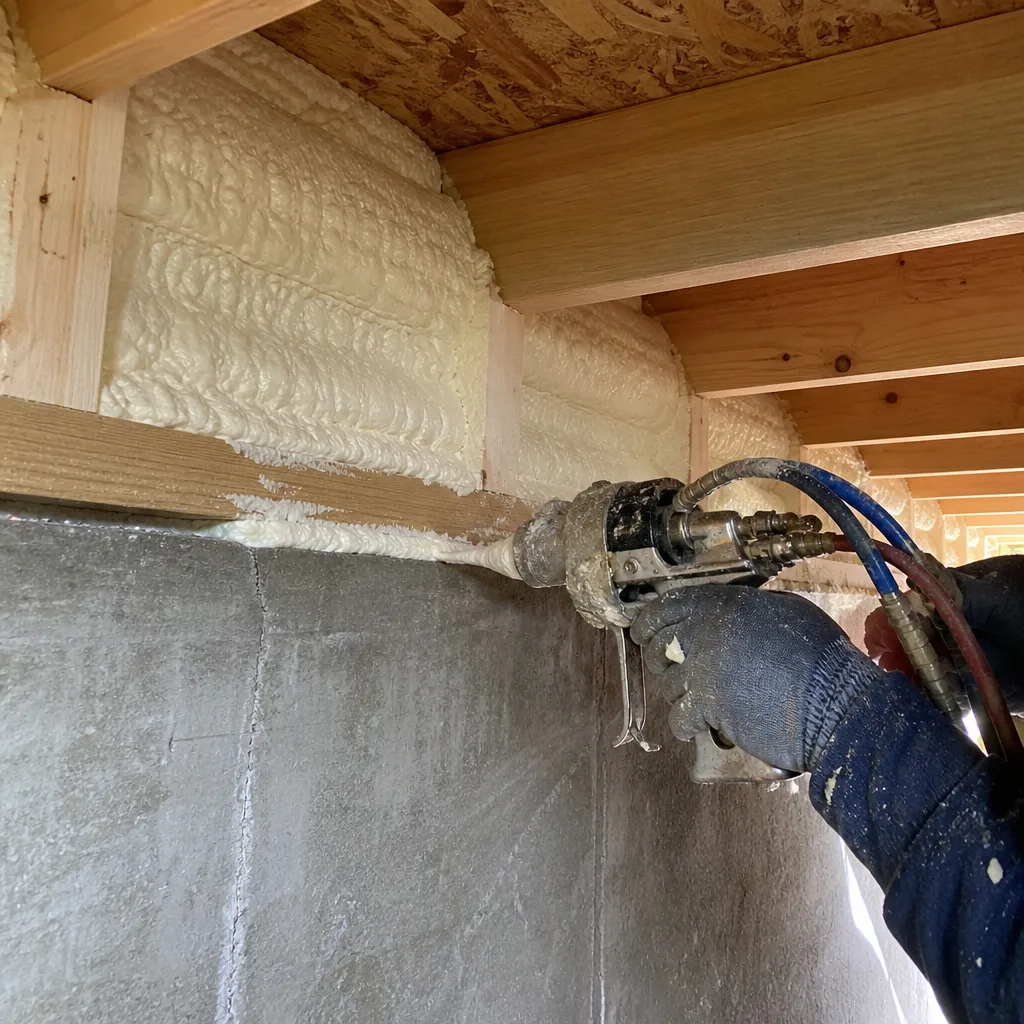
- Active spray application (1 to 5 hours). This is the part most people picture. Actual spray time depends on square footage and thickness. A small rim-joist band can wrap in under an hour. A full attic deck at 3 inches of closed-cell foam is a multi-hour job, sometimes two visits if lifts are required.
- Cure and off-gassing window (24 to 72 hours). The foam sets up in minutes but continues to release trace compounds for hours afterward. This window is the real re-entry clock, and it’s the one worth putting on your calendar before the truck arrives.
For a broader look at how spray foam compares to other approaches in the area, our Spray Foam Insulation in Enterprise page breaks down which attic cavities and rim joists benefit most.
What Actually Drives How Long Spray Foam Takes
No two attics run on the same clock. Four factors determine whether your job finishes in half a day or stretches to two:
- Square footage and thickness. Foam is applied in passes measured in inches. Doubling the thickness roughly doubles the spray time on the same surface. A 1,500-square-foot attic deck at 2 inches is a very different job than at 5 inches.
- Number of lifts required. Attics with tricky rooflines, low clearances, or obstructions often need scaffolding or lift setups. Each lift adds setup and teardown time to the job, sometimes an hour or more total.
- Open-cell vs. closed-cell. Closed-cell foam cures faster and can be sprayed in thicker passes, but it’s denser and slower to apply per inch. Open-cell goes down quicker but may need thicker total depth to hit the same R-value.
- Access and prep. A clean, easy-access hatch trims prep dramatically. A cramped crawlspace or a cluttered attic in a full Enterprise household adds masking and clearing time before a single pass is made.
If you’re weighing spray foam against a loose-fill approach, our guide to Blown In Insulation in Enterprise shows where the timelines diverge and which attic types favor each method.
The Re-Occupancy Gap Nobody Tells You About
Here’s the part that gets buried: freshly applied spray foam off-gasses for hours after the crew leaves. Manufacturer guidance and EPA literature typically call for 24 hours of ventilation and no occupancy during active application and initial cure, with longer windows (sometimes 48 to 72 hours) for sensitive occupants, homes with poor ventilation, or thicker closed-cell installs.
What contractors usually say is “you’re good to go” the moment wheels leave the driveway. That’s a problem, because “the crew is done” and “the home is clear to re-enter” are two different milestones.
What homeowners in Enterprise should plan for:
- Ventilate aggressively for the first 24 hours. Open windows, run fans, and let the attic breathe.
- Keep kids and pets out during active cure. Curious toddlers and cats don’t understand “don’t touch that wall.”
- Defer sensitive activities. If someone in the home has asthma or chemical sensitivity, plan an extra day away.
- Schedule around the window, not the visit. If you need the house clear by dinnertime, book a morning start and confirm the cure window in writing.
Our crew at Aspen Attic Insulation Enterprise builds the cure window into your estimate from the start, not the day of. It’s a detail that affects real life, and we treat it that way.
Open-Cell vs. Closed-Cell: Two Different Clocks
The two foam families run on different timelines, and choosing wrong for your Enterprise attic can cost you both time and performance.
- Open-cell foam is lighter and expands more. It goes down fast per pass, but often needs a thicker depth to reach the target R-value, which adds total spray time. It cures more slowly and stays tacky longer, so the off-gassing window can stretch toward the longer end.
- Closed-cell foam is denser, sets faster, and delivers more R-value per inch. It sprays down a little slower per pass but reaches insulation target depth faster overall. Cure is quicker, so re-entry can land nearer the 24-hour mark in a well-ventilated attic.
In Enterprise’s dry, hot-climate attics, we often lean toward closed-cell for rim joists and roof decks because it handles temperature swings and seals tighter against desert air infiltration. For interior wall cavities, open-cell sometimes wins on cost and speed. Our technicians have up to 24 years of experience selecting the right product from brands like Icynene and Demilec, matched to the specific need rather than whatever happens to be on the shelf.
For the full picture of our insulation services across the area, see Attic Insulation in Enterprise.
What Delays a Spray Foam Job Mid-Project
Spray foam is sensitive to conditions. When something shifts mid-job, the crew has to pause, and the timeline you were quoted can slide. The usual culprits:
- Temperature drops. Foam needs substrate and ambient temperatures within the manufacturer’s range. A cold snap in the attic can halt spraying until it warms up.
- Humidity spikes. High moisture in the air interferes with proper curing, especially with open-cell foam. Crews sometimes have to wait for conditions to settle.
- Substrate moisture. Damp wood won’t bond properly. If we find moisture in an Enterprise attic, we pause and address the source before spraying. Corners cut here show up years later as adhesion failures.
- Hidden damage discovered on arrival. Old water stains, pest damage, or a compromised decking can turn a straight spray job into a repair-and-spray job. Better to know early.
- Access surprises. A stuck hatch or obstructed joist bay forces re-staging and adds time.
Planning a buffer of a half-day, or scheduling the job when you don’t need the attic space immediately afterward, gives the crew room to handle a surprise without wrecking your week.
What to Expect on the Day: Hour by Hour
Here’s how a typical day runs for a residential spray foam job:
- Arrival and walkthrough (30 minutes). The technician arrives in a marked uniform with a photo ID badge, confirms the scope, and does a final condition check. If the tech who shows up isn’t the one whose name and photo were sent ahead, the visit is free. That’s a written commitment, not a marketing line.
- Prep and masking (1 to 3 hours). Drop cloths, outlet protection, ventilation setup, equipment staging.
- Active spray (1 to 5 hours). Foam applied in passes to the target thickness. Between passes, the crew checks depth and coverage.
- Initial set and trim (30 to 60 minutes). Excess foam trimmed, surfaces inspected, ventilation verified for active off-gassing.
- Walkthrough with the homeowner. The crew walks the finished space with you, explains the cure window, and puts the re-entry timing in writing.
- Departure and cure window begins. Plan to stay out of the treated space for at least 24 hours, longer if you’ve got sensitive occupants or thicker closed-cell installs.
For more on how each of our services compares, our Aspen Attic Insulation Enterprise home page lays out the full lineup.
What Aspen Puts in Writing Before the Job Starts
None of the details above should surprise you the day the crew shows up. Here’s what every Aspen Attic Insulation Enterprise job includes in writing before any work begins:
- Estimated timeline. Prep hours, spray hours, and the expected cure window, spelled out so you can plan around it.
- Written price. Delivered before any work starts, with no post-job surprises. Line items, materials, and scope clear from the start.
- Your technician’s name and photo. Sent to you before the visit so you know exactly who’s coming to your door. Background-checked, identity-verified, arriving in a clean marked uniform with a photo badge.
- The 365-Day Done Right Promise. Every repair covered for a full year, labor and materials, with a free second visit if a repair fails. Backed in writing.
We’re part of the Threshold Group family, founded in 2002, with each location independently owned and operated to the Threshold Verified standard. A live person answers the phone 24/7. Every detail of the plan above is standard, not an upsell.
Common Mistakes to Avoid
- Planning to be home the same evening. The job may end at noon, but the cure window belongs to the foam, not the crew. Build in a night out, or start the job when the house is empty.
- Forgetting the pets. Cats and dogs get curious, and closed rooms do not stop them for long. Board pets for at least the first day of cure.
- Skipping ventilation confirmation. Ask the crew to confirm in writing how long the off-gassing window runs. If a contractor won’t put it in writing, that’s a red flag.
- Booking a winter morning without a heat plan. Even in Enterprise, cold snaps can hit an unheated attic. Confirm the substrate temps before the visit.
- Ignoring moisture clues. A small drip or a musty smell near the attic hatch usually means moisture the crew will have to address before spraying. Better to flag it at booking.
- Choosing the cheapest quote without a written cure window. The lowest bid often leaves the off-gassing detail to chance. Ask each contractor for their cure timing, in writing, before signing.
- Disposing of the re-entry plan. Keep the written timeline somewhere visible. It’s the difference between a smooth re-entry and an unplanned hotel night.
When to Call a Professional
Spray foam is not a weekend project. It requires pressurized equipment, precise mixing, and careful management of off-gassing to be safe for your family. Call a professional if you have attic drafts, a rim joist that sweats in winter, an entire upper floor that never feels warm, or a home in Enterprise with uneven heat between rooms. If you’re uncertain whether spray foam or a different insulation type fits your attic, that’s a conversation worth having before any work is booked. Aspen Attic Insulation Enterprise offers free estimates in Enterprise. Call (844) 761-9996 and a live person will answer, walk you through the timeline, and put your price and your technician’s name in writing.
Frequently Asked Questions
Most residential spray foam jobs in Enterprise take 4 to 8 hours of active work on the day of install, plus a 24 to 72 hour cure window before it’s safe to occupy the space. The active work is split between prep, spray, and clean-up, and the cure window is the part that sets the real clock on when your family can re-enter. Call (844) 761-9996 for an exact timeline on your home.
No, plan to stay out of the treated space during active application and the initial cure. Manufacturer and EPA guidance typically calls for 24 hours of ventilation with no occupancy, and longer windows for sensitive occupants or thick closed-cell installs. For an attic job, that often just means keeping the attic door sealed and the space ventilated. Call (844) 761-9996 and we’ll spell out the exact window for your install.
Per pass, open-cell foam sprays down faster, but it often needs thicker depth to hit the right R-value, so the total job can run similar to closed-cell. Closed-cell reaches target insulation depth with less material, cures faster, and typically allows re-entry sooner once ventilation is verified. In Enterprise’s dry heat, we often recommend closed-cell for rim joists and roof decks and open-cell for certain wall cavities. Our technicians have up to 24 years of experience matching the right product to the space.
The visit is free, and we make it right. Every Aspen technician is background-checked, identity-verified, and matched by name and photo to the visit before anyone knocks on your door. If a different person shows up, that’s a billing error on our side, not yours. Call (844) 761-9996 to schedule with a technician you know by name.
Spray foam doesn’t tolerate cold substrate temps, high humidity, or wet wood, and crews have to pause when conditions fall outside the manufacturer’s range. In Enterprise, this is rare but real, especially in winter mornings or after a rare rain event. That’s why we build a buffer into the schedule and confirm substrate conditions before spraying. Call (844) 761-9996 to talk through timing for your project.
Once the cure window closes and ventilation is confirmed clear, the attic is back in service, typically 24 to 72 hours after the crew leaves. If there’s no odor and the space is well-ventilated, most homeowners are cleared by day two. If the foam is thick closed-cell in a low-ventilation space, plan toward the longer end. Call (844) 761-9996 and we’ll confirm the exact clearance for your install in writing.
The Bottom Line
The spray foam job itself is rarely the slow part. The cure window is. Plan for 4 to 8 hours of active work on the day of install, plus 24 to 72 hours of off-gassing before your family can safely re-enter and stay inside. What determines the total clock is square footage, thickness, number of lifts, and whether the foam is open-cell or closed-cell. Enterprise’s dry climate usually works in your favor, but the cure window is non-negotiable, and a contractor who buries it in the fine print is telling you something about how the rest of the job will go. Aspen Attic Insulation Enterprise puts the timeline, the price, and the technician’s name in writing before anyone shows up.
Contact
Ready to put a real timeline and a written price on your spray foam project? Call (844) 761-9996 for a free estimate in Enterprise. A live person answers 24/7, and you’ll know your technician’s name and photo before the visit. Every job is backed by the 365-Day Done Right Promise, in writing.
Written by the team at Aspen Attic Insulation Enterprise.